Generative Structures Inspired by Country

Harlin Bunya Grove

Brisbane Valley Highway, Harlin, QLD | 2022 | 1.4 ha

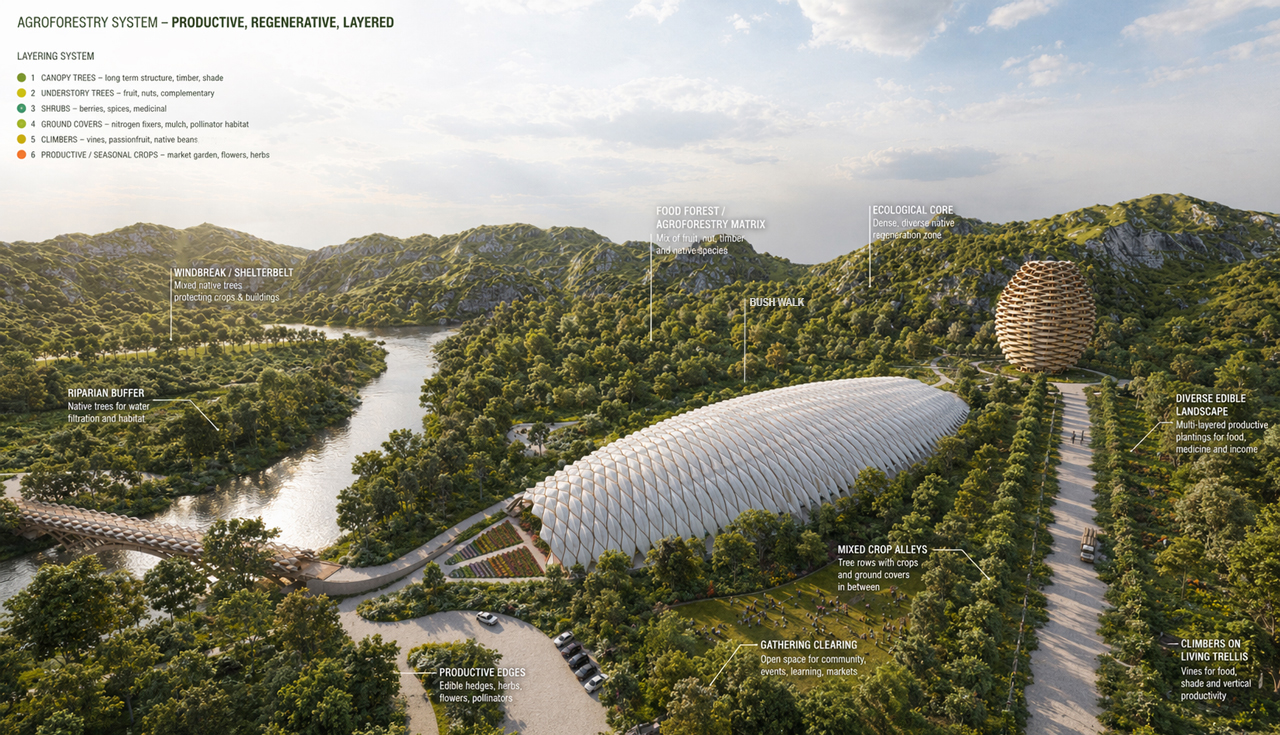
Harlin Bunya Grove proposes a large-scale agroforestry landscape and civic infrastructure along Ivory Creek in Harlin, Queensland. Structured by timber interventions woven along the Brisbane Valley Rail Trail, the project reimagines the floodplain as regenerative infrastructure integrating ecological restoration, research, cultivation, and public gathering.

Inspired by the historic Bunya nut pilgrimages that once traversed this terrain, the rail trail becomes a contemporary journey through a landscape of renewal shaped by generative structures abstracted from the Bunya cone, where ecological and civic systems converge through a continuous act of Designing for Country.

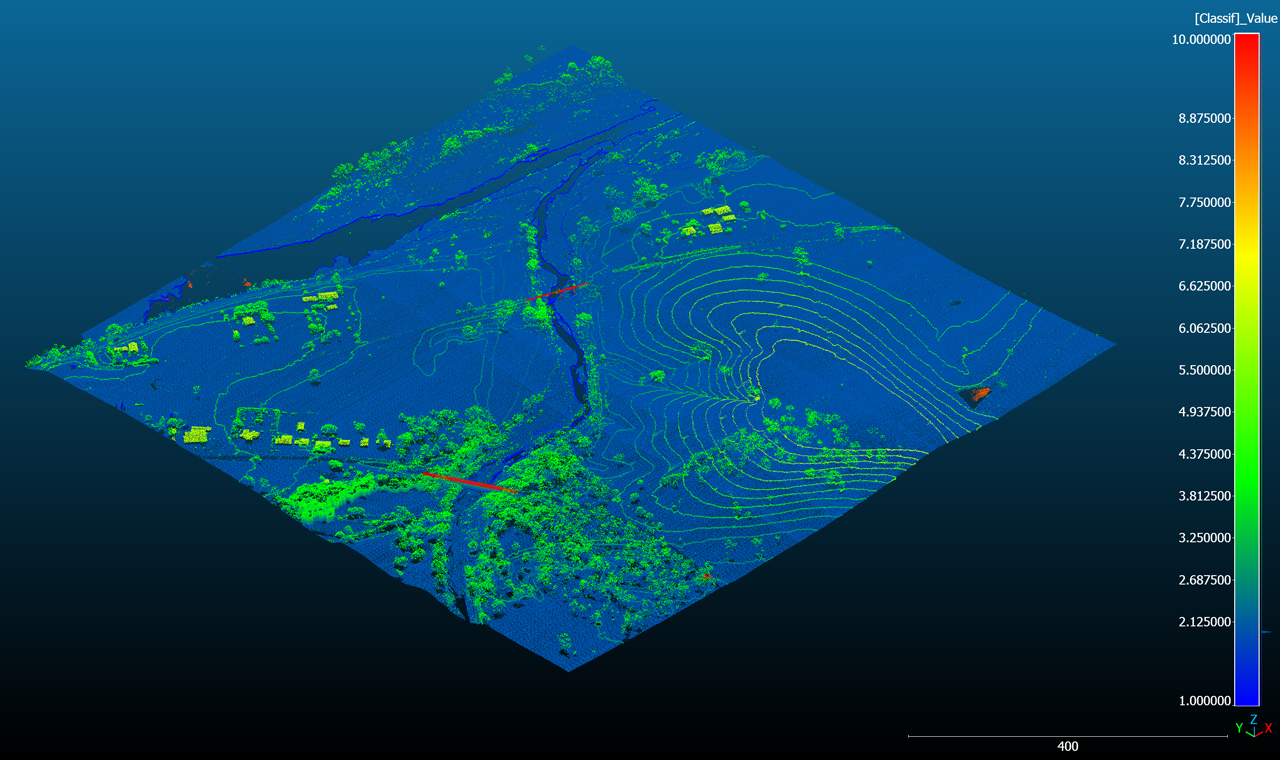
Existing site analysis outlining constraints, opportunities, and the proposed development strategy.

Fragmented and Flooding

Located in the Somerset region of Queensland, the site is defined by its relationship to Ivory Creek and the Brisbane Valley Rail Trail—an agricultural landscape shaped by recurring flood events. 

Seasonal flooding transects the land, disconnecting it from the Harlin community, a condition worsened by the loss of the original Harlin Bridge. Historically cleared for farming, the land now lacks the ecological “sponge” needed to absorb overflow, leaving access limited to the Brisbane Valley Highway and the undulating Rail Trail.

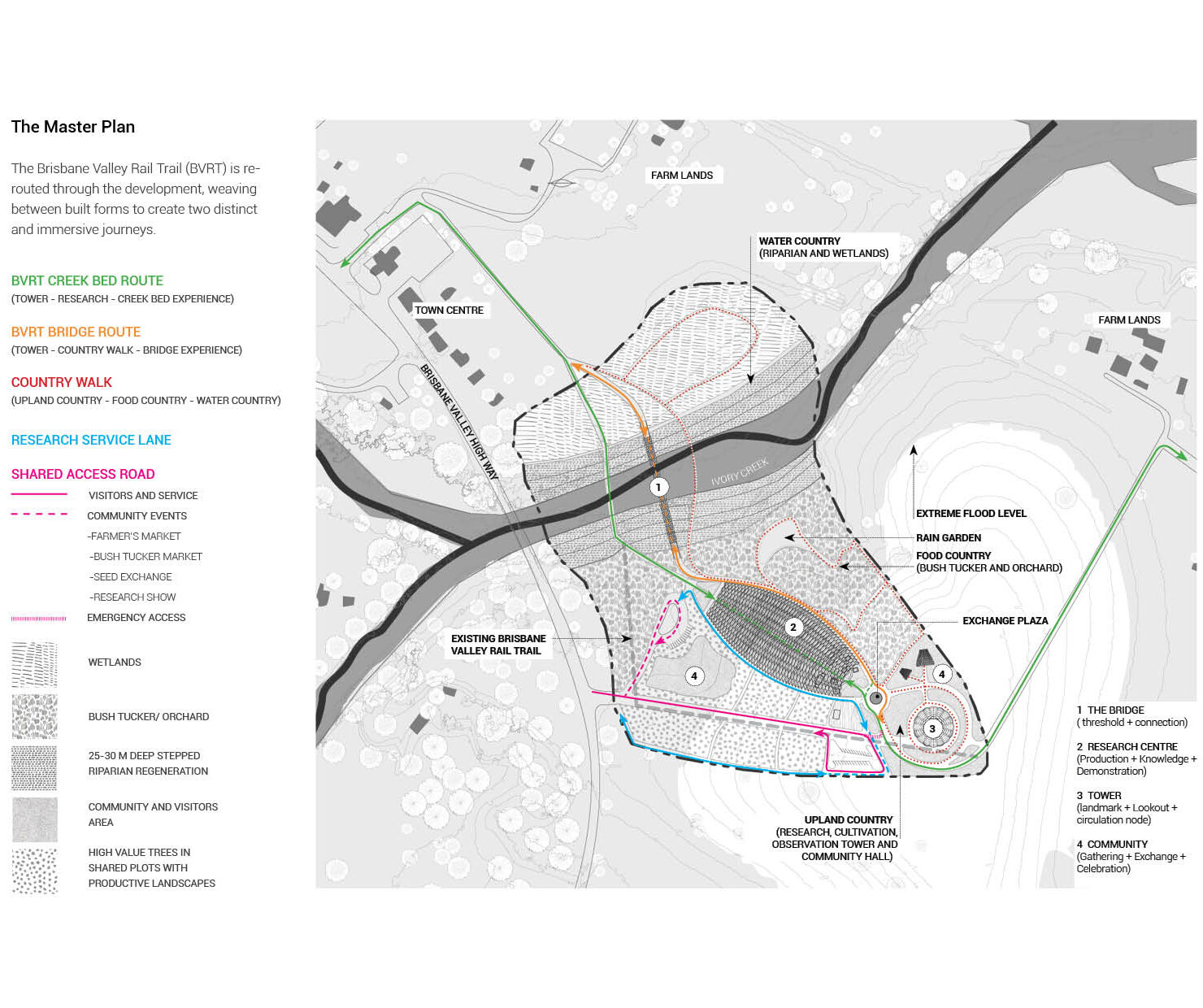
Masterplan — a layered agroforestry landscape integrating research, regeneration, and community within a living productive system.

A Generative Model for Regeneration

The project reunites land and community through a suite of generative timber structures and a rerouted Brisbane Valley Rail Trail woven through the recovering landscape. Agroforestry and horticultural systems form a living sponge that absorbs floodwaters, restores ecological rhythms, and cultivates a productive landscape of coexistence.

Concept

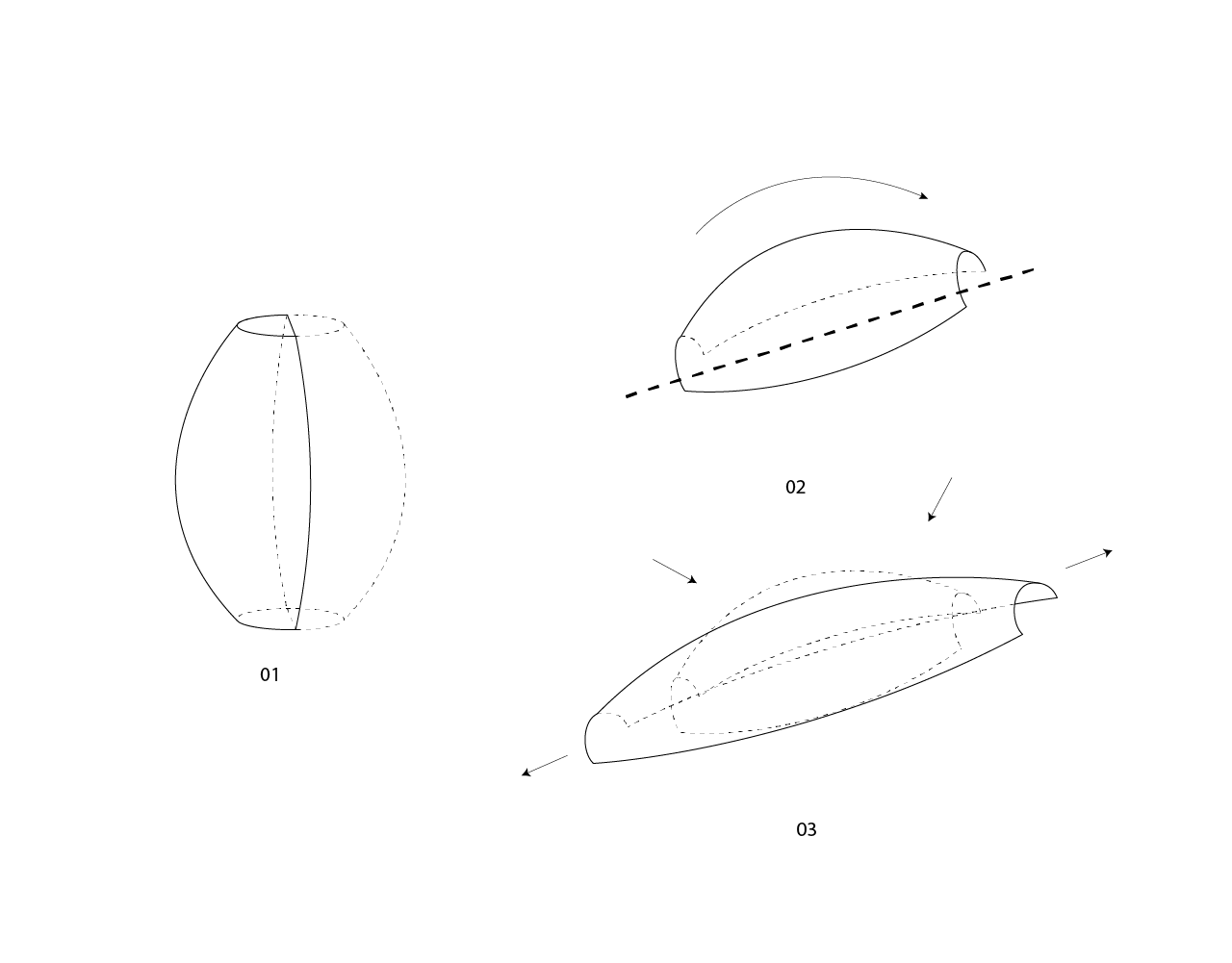
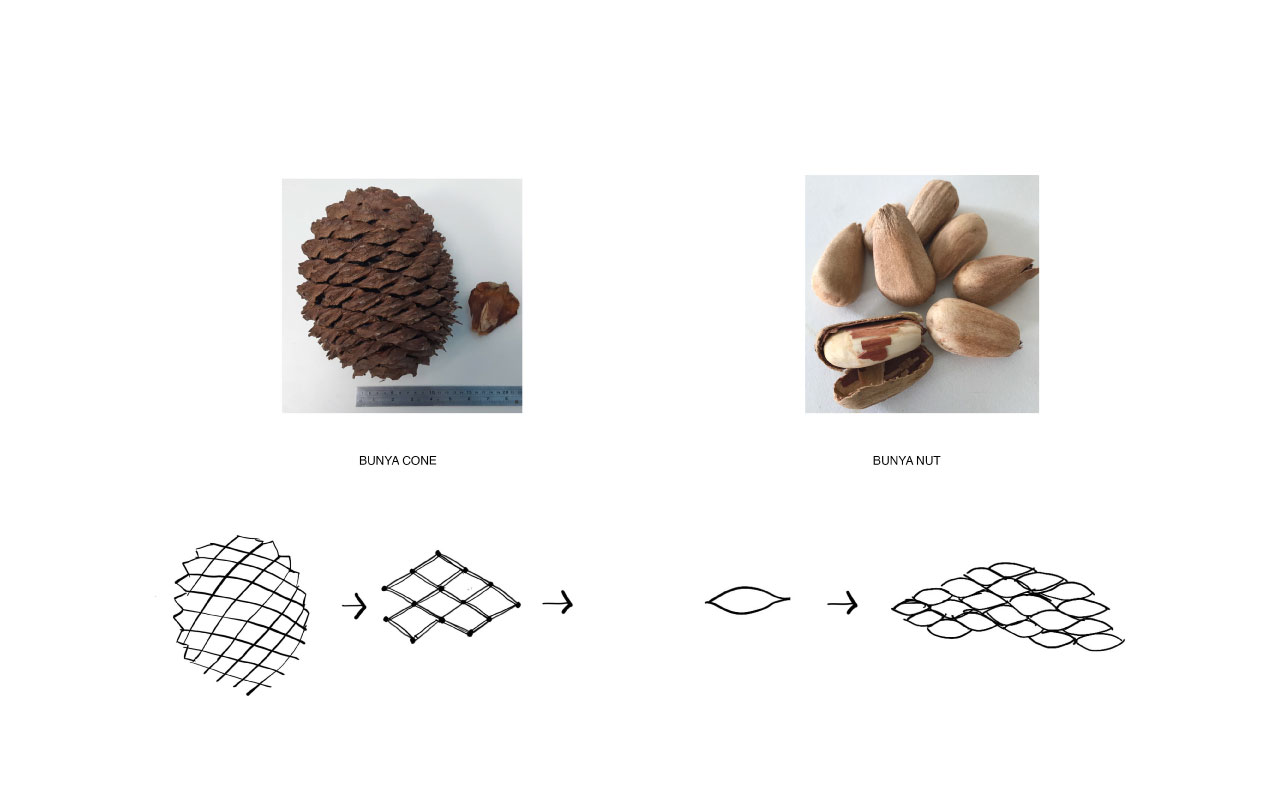
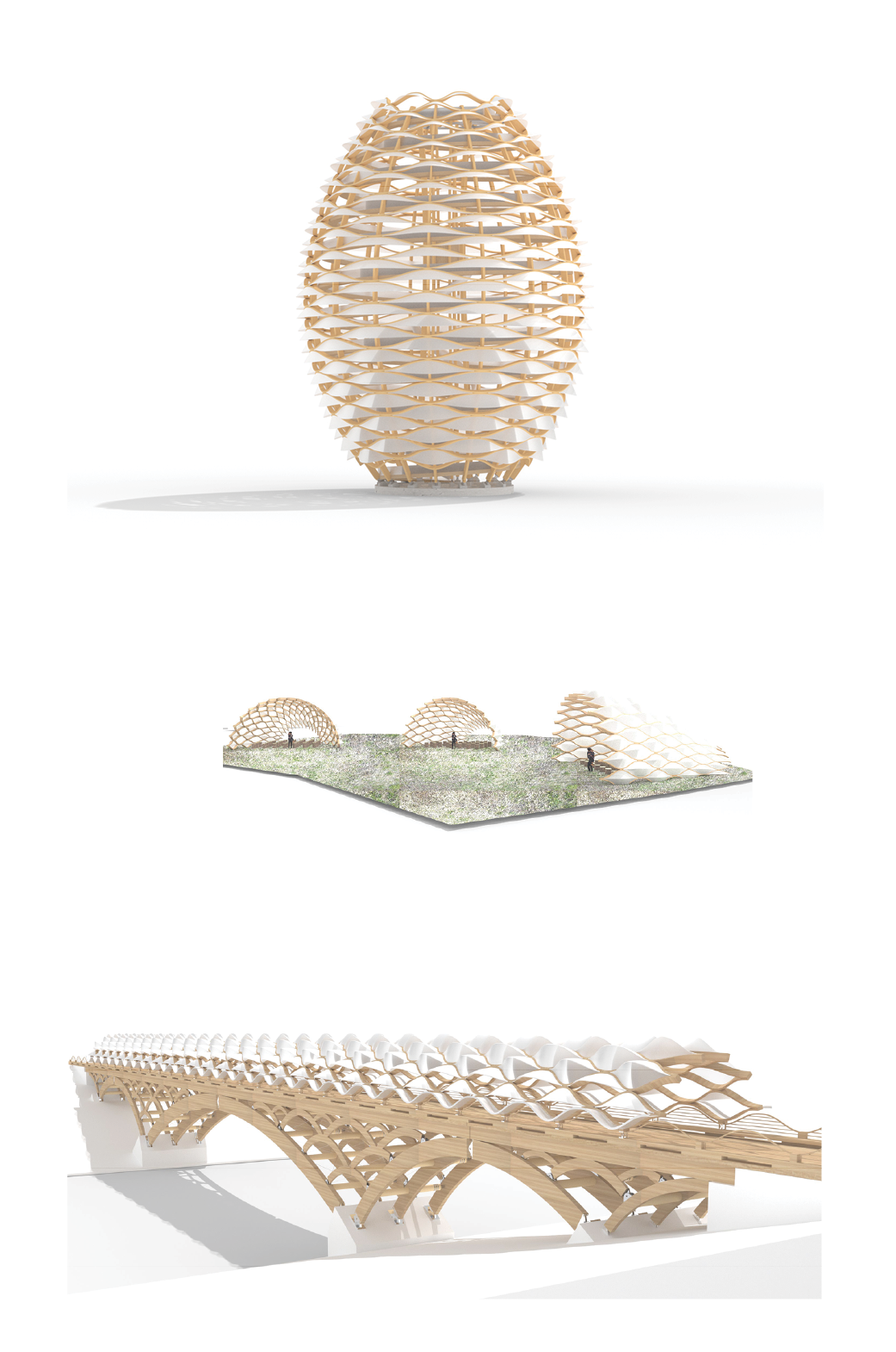
The design abstracts the cone’s morphology into a modular structural system capable of transforming across diverse spatial conditions.

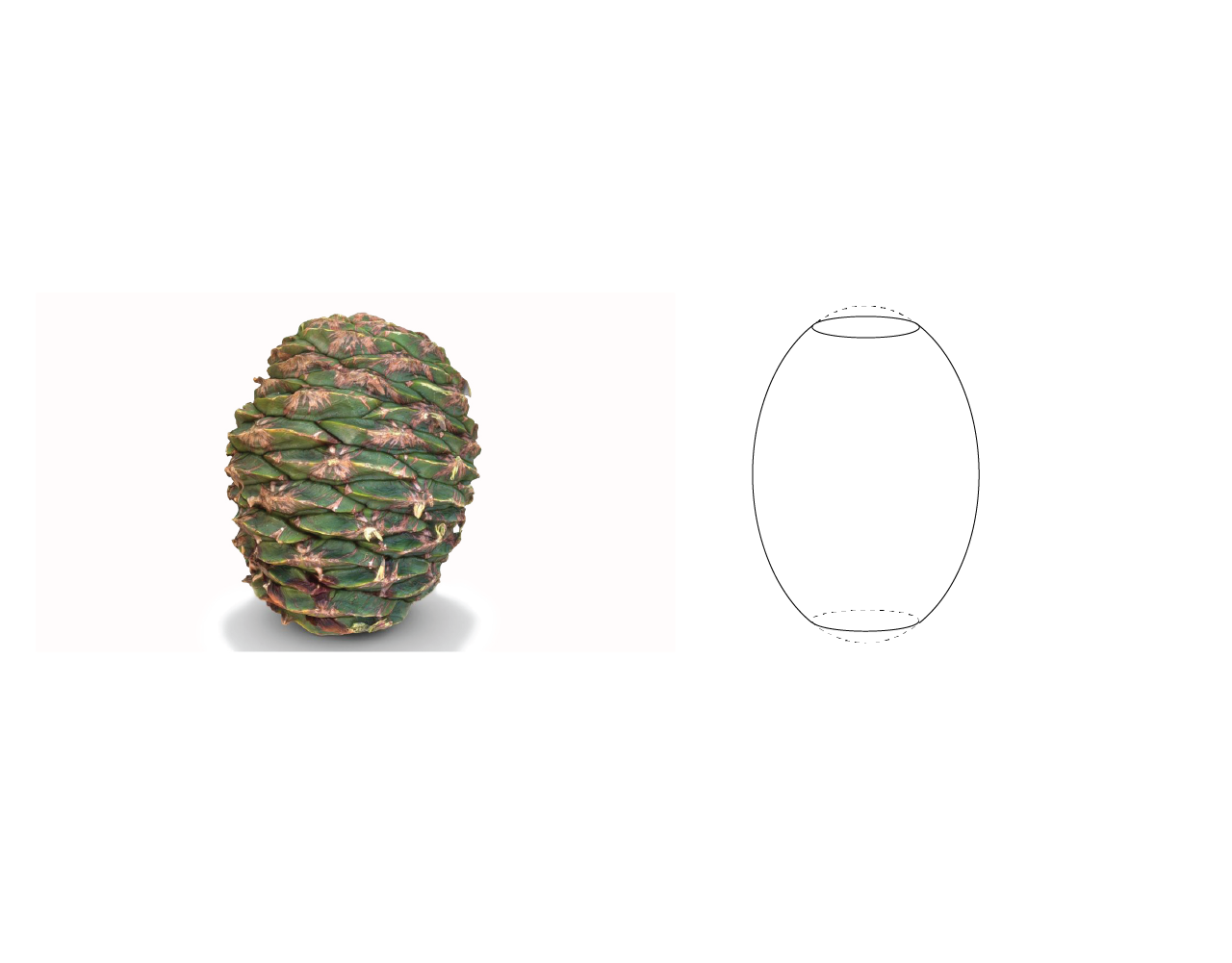
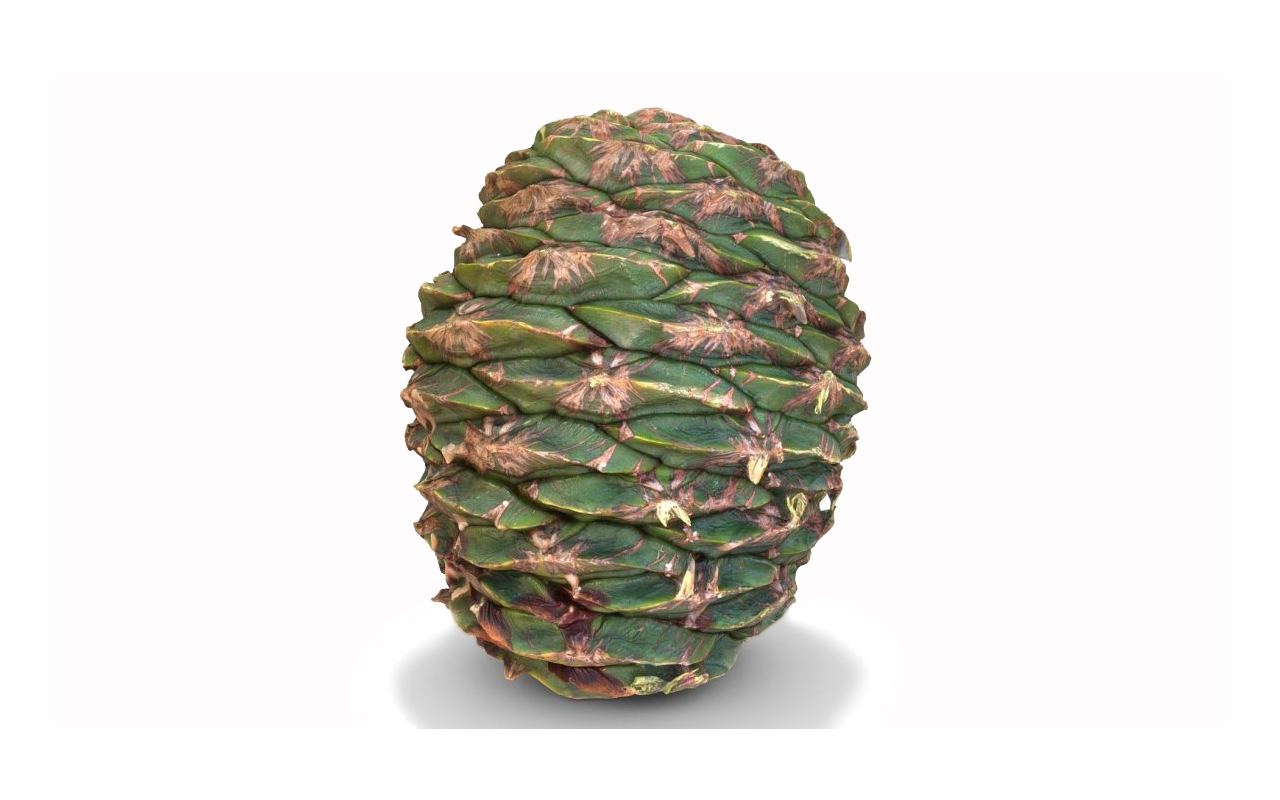
The Bunya cone’s phyllotaxis and seed curvature are distilled into a repeatable structural element — the foundational “seed” from which the system grows.

The female Bunya cone’s phyllotaxis and seed geometry synthesised into a single repeatable module, forming the foundational “seed” of the system.
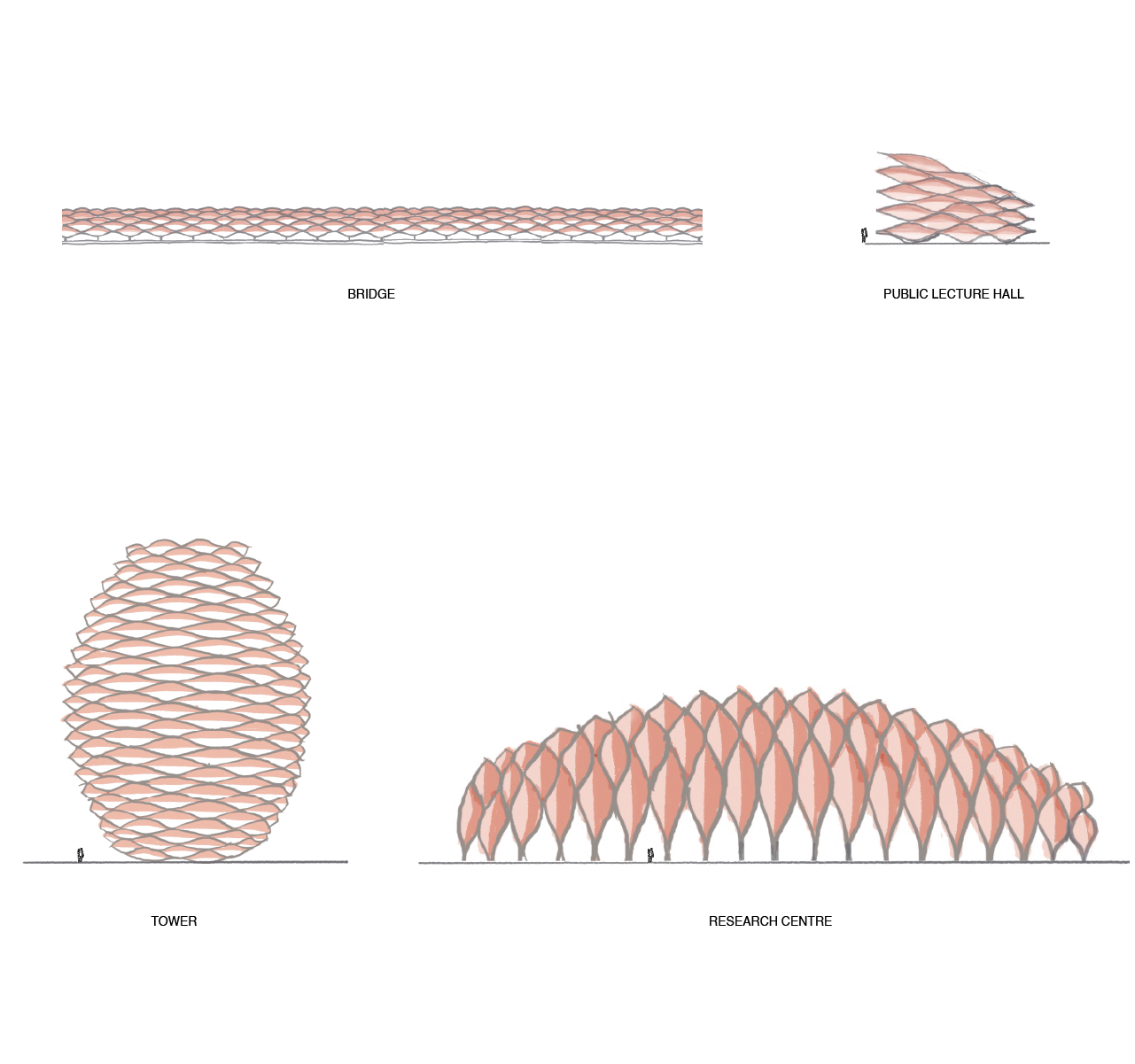
From iterative testing, four spatial families were selected based on structural efficiency, programmatic adaptability, and landscape integration.

Generative System

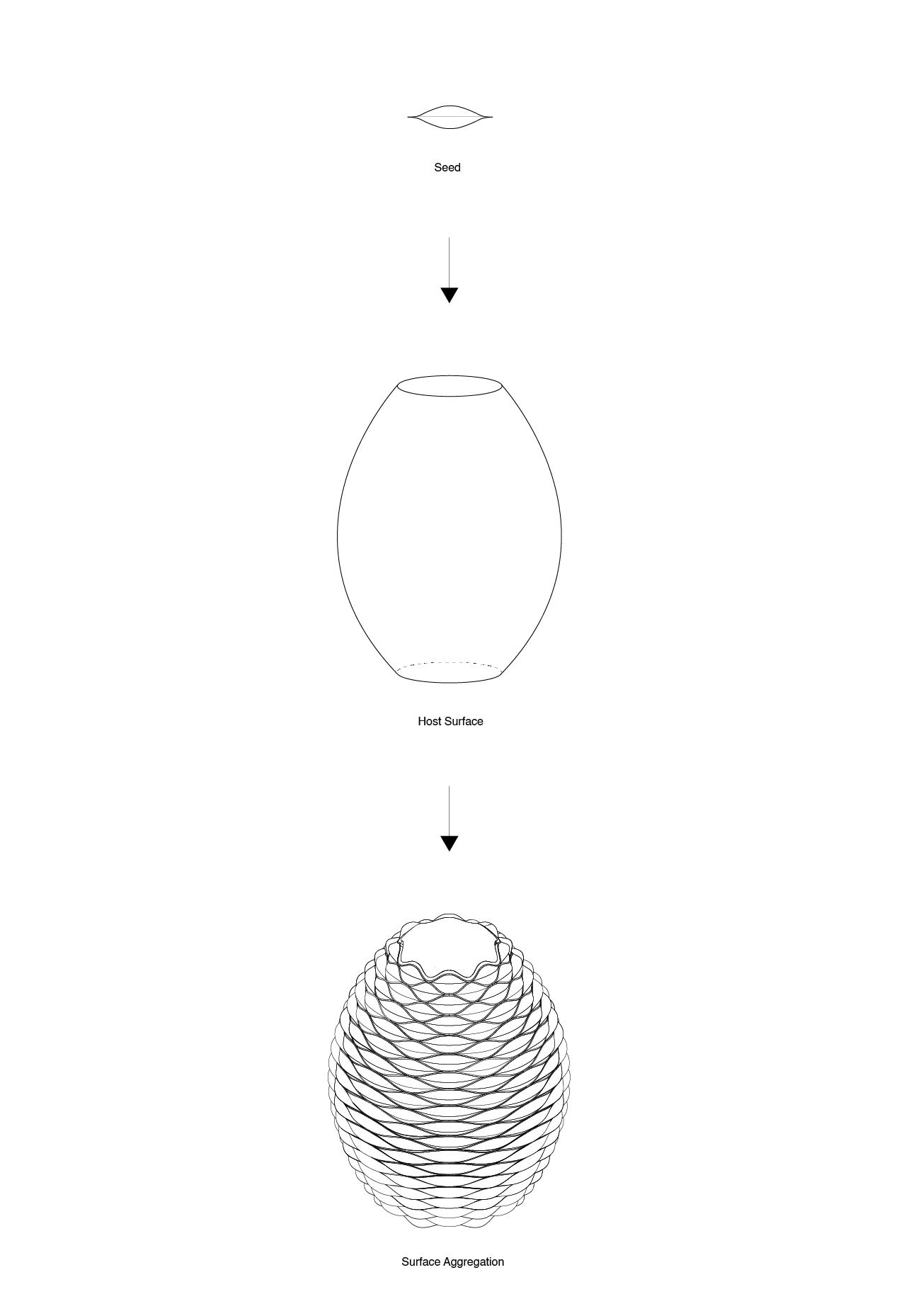
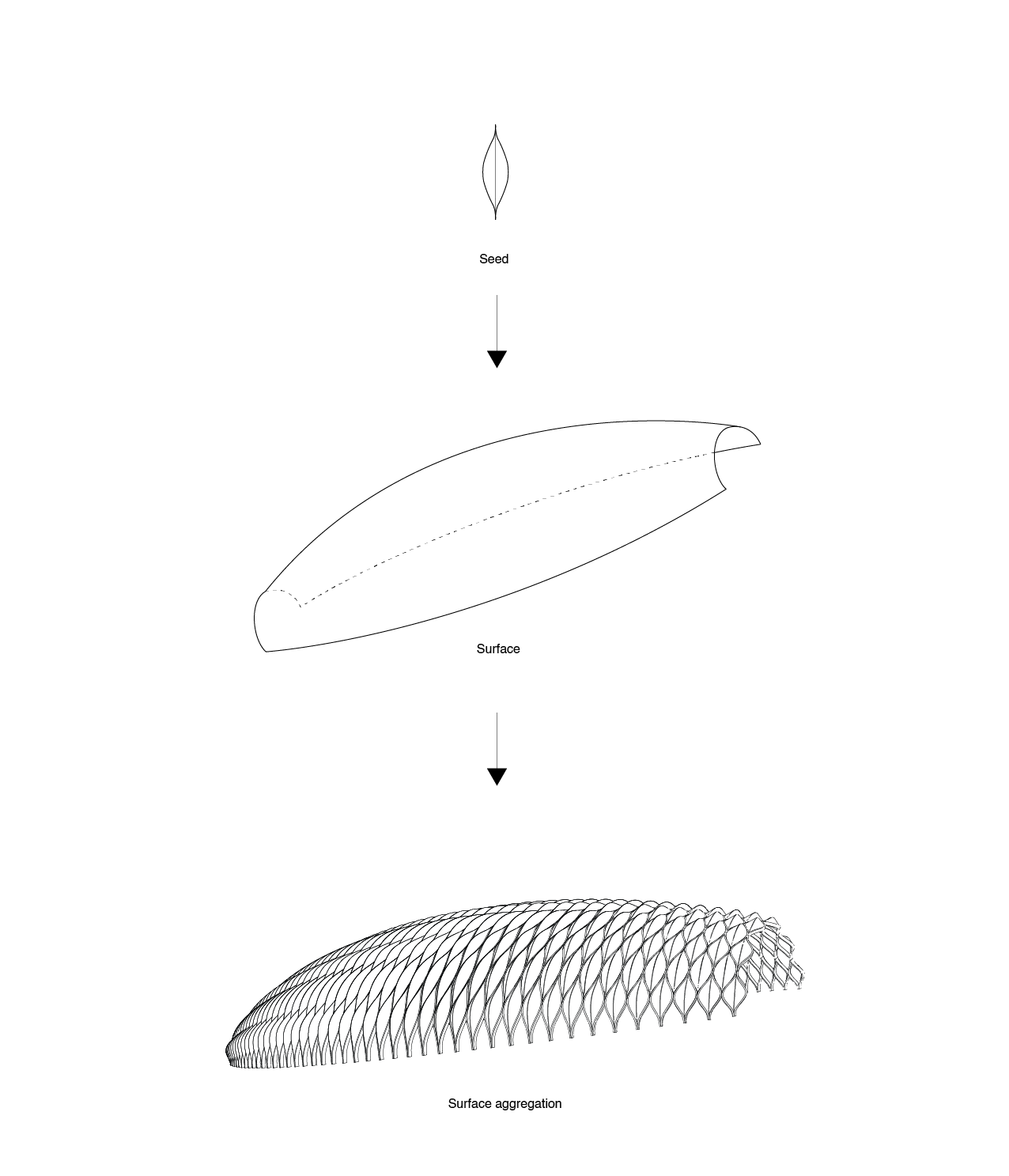
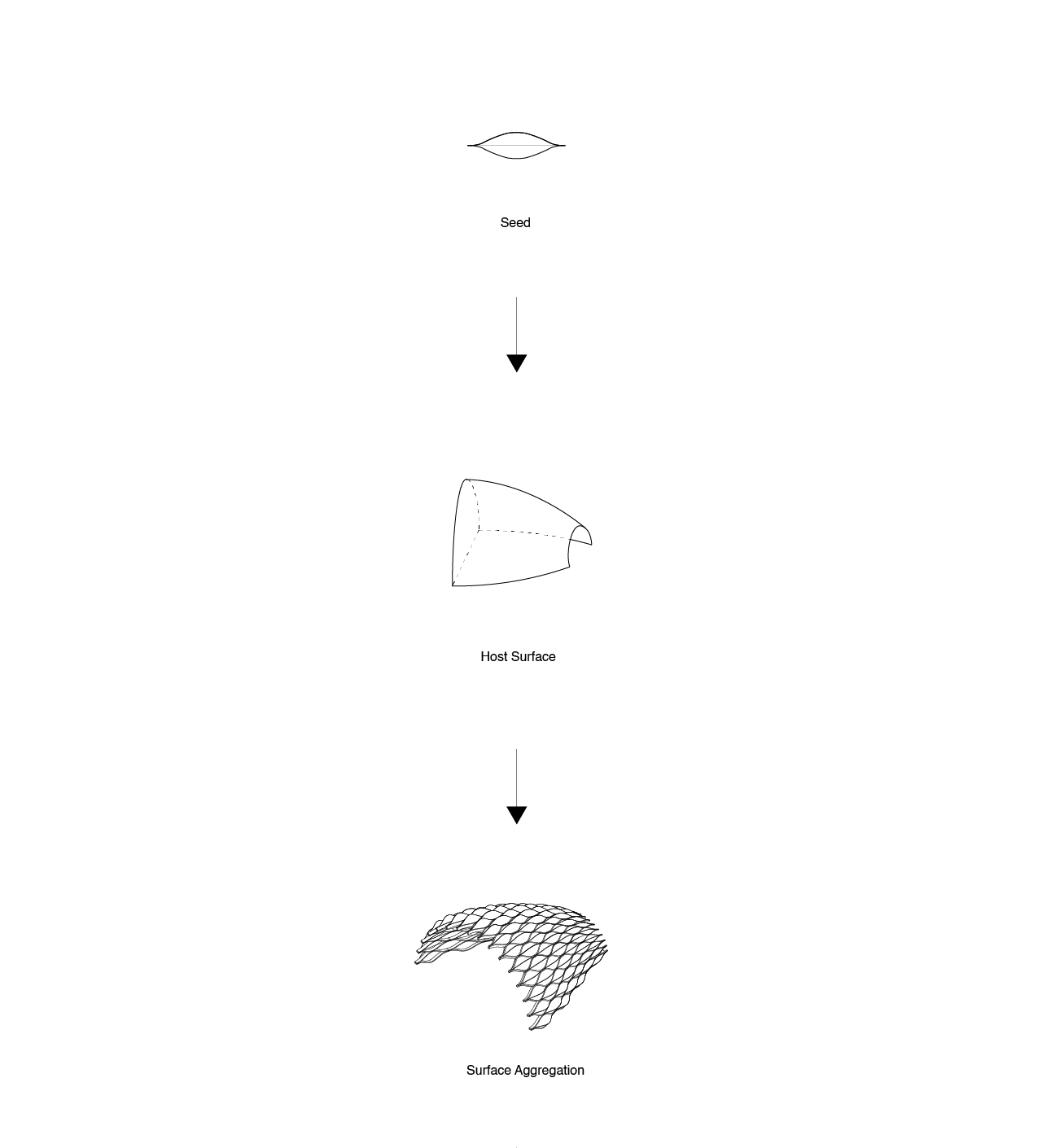
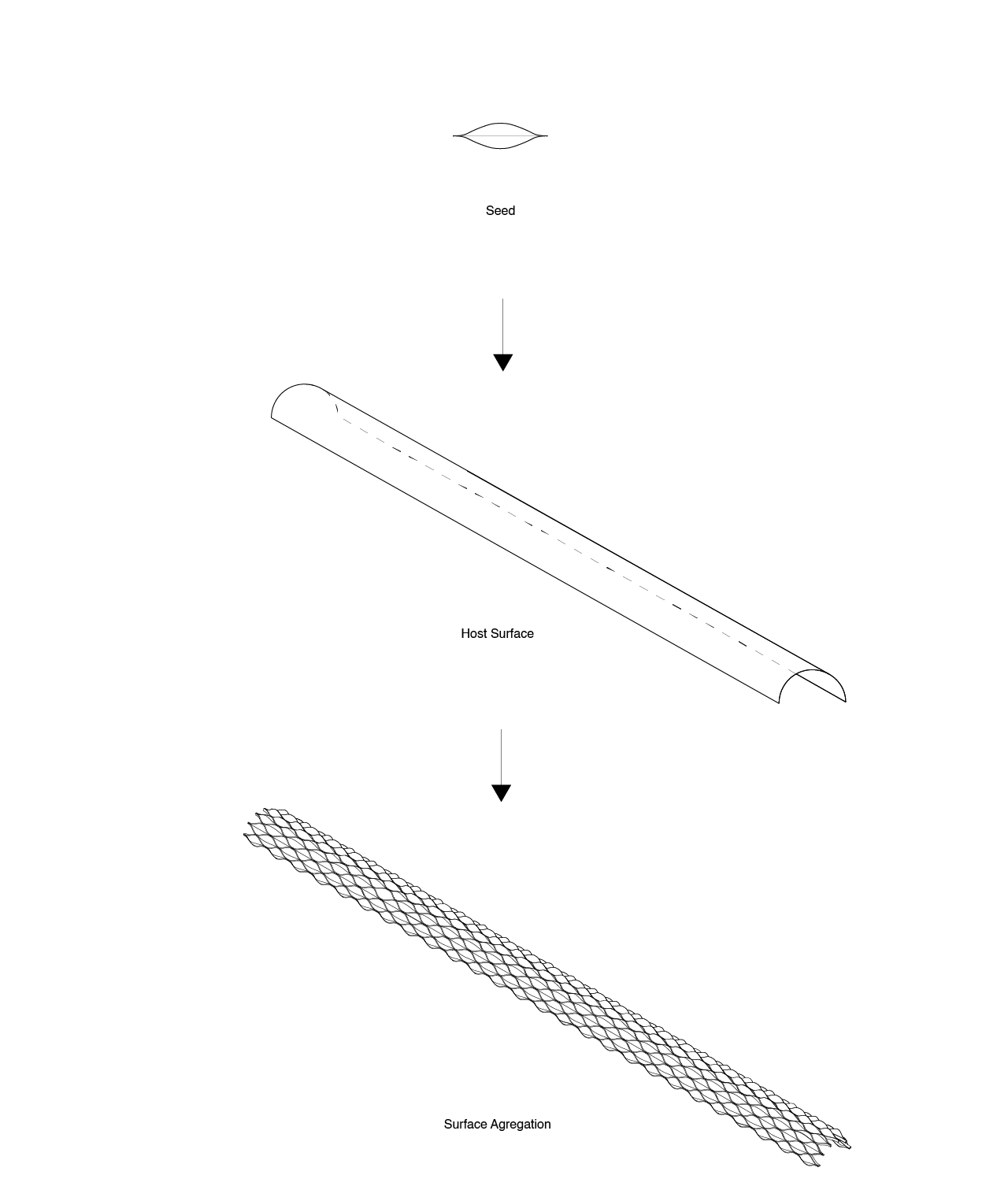
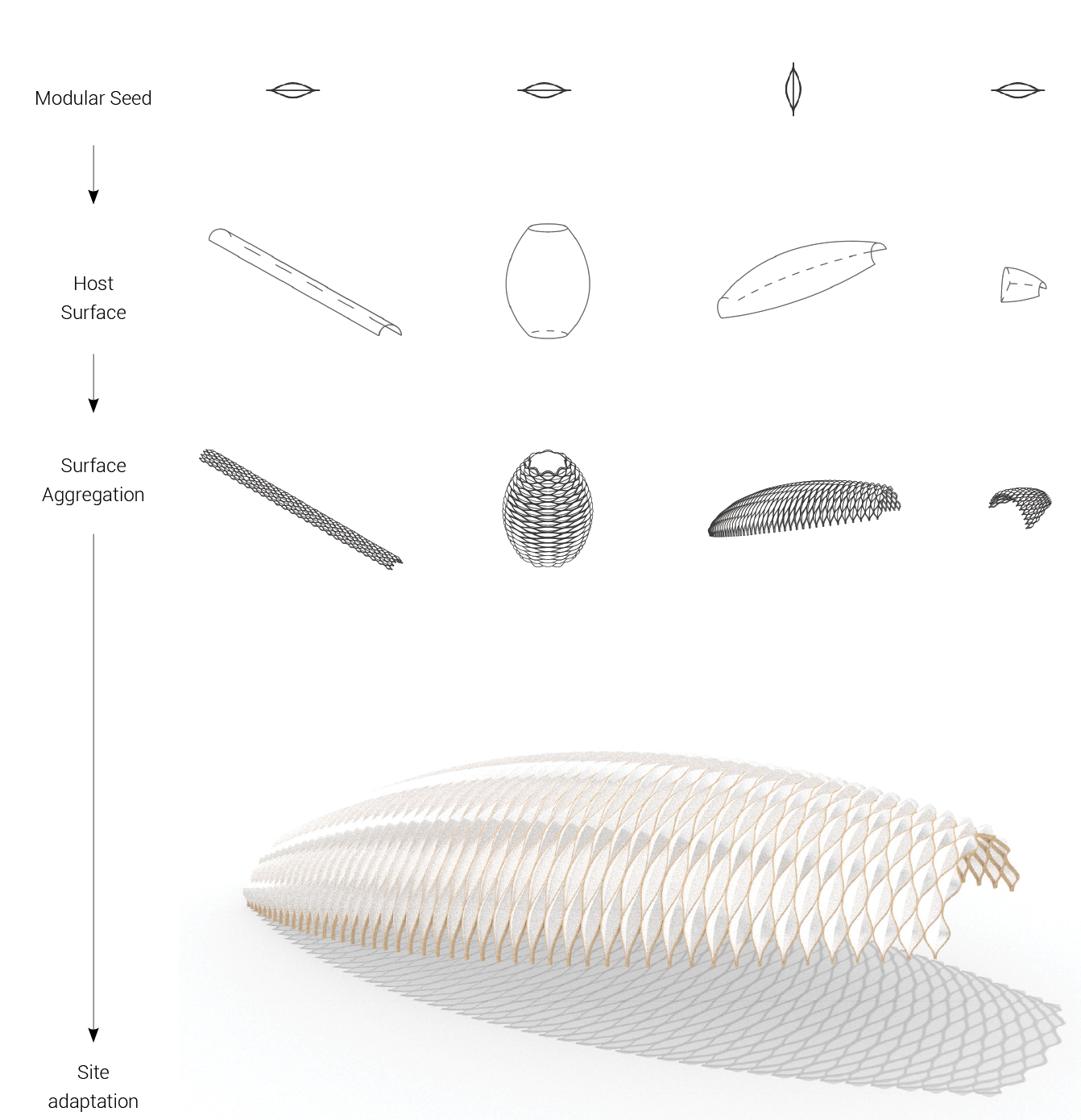
The project operates through four rules to generate architectural topology iterations:

Rule 1 — Seed
A modular unit. 

Rule 2 — Host Surface
A spatial surface abstracted from cone geometry and calibrated in response to program and terrain.

Rule 3 — Aggregation
Seed modules are distributed across the host surface.

Rule 4 — Adaptation
Structural ribs and infill adjusted for environmental performance and terrain negotiation.


The DNA Strip

Topologies


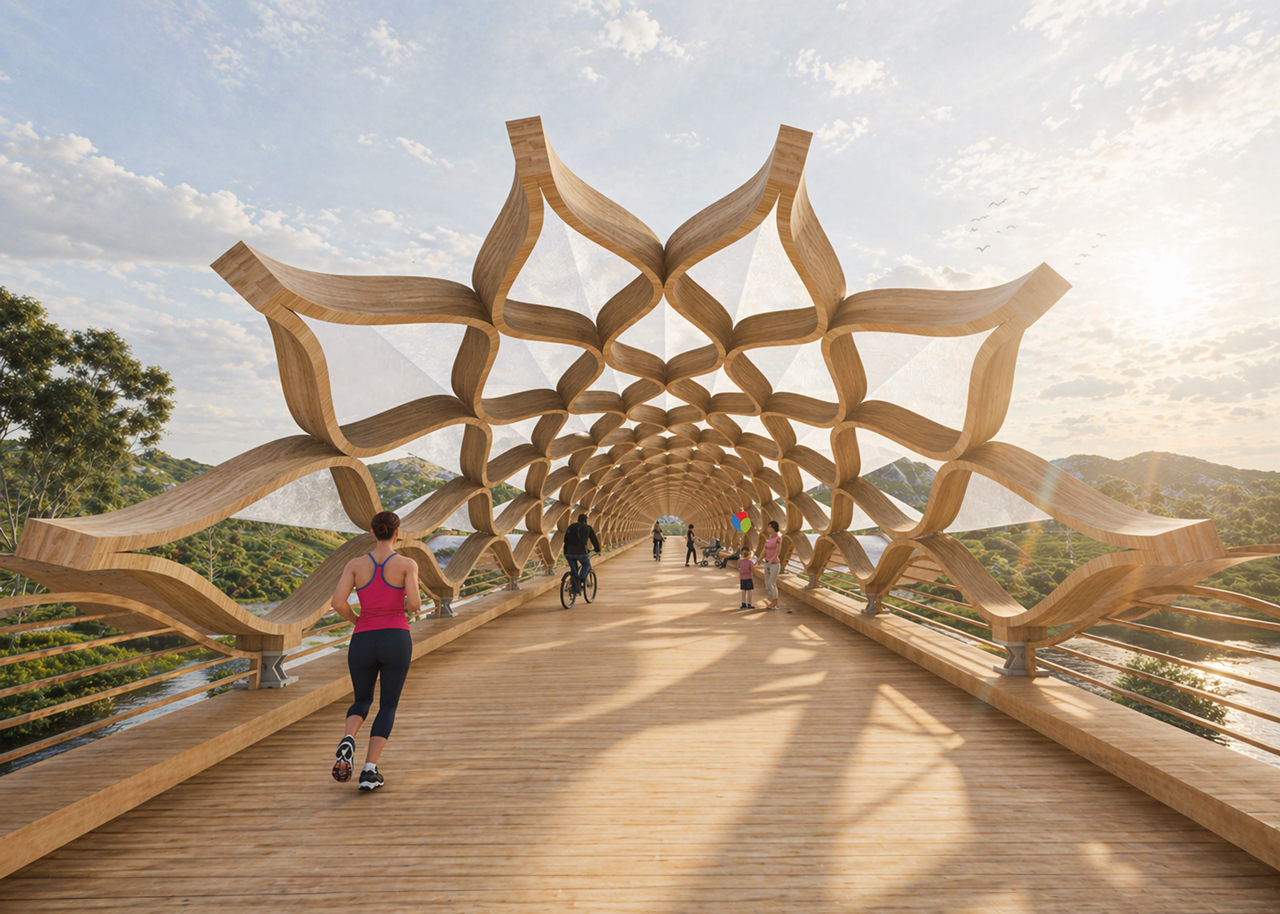
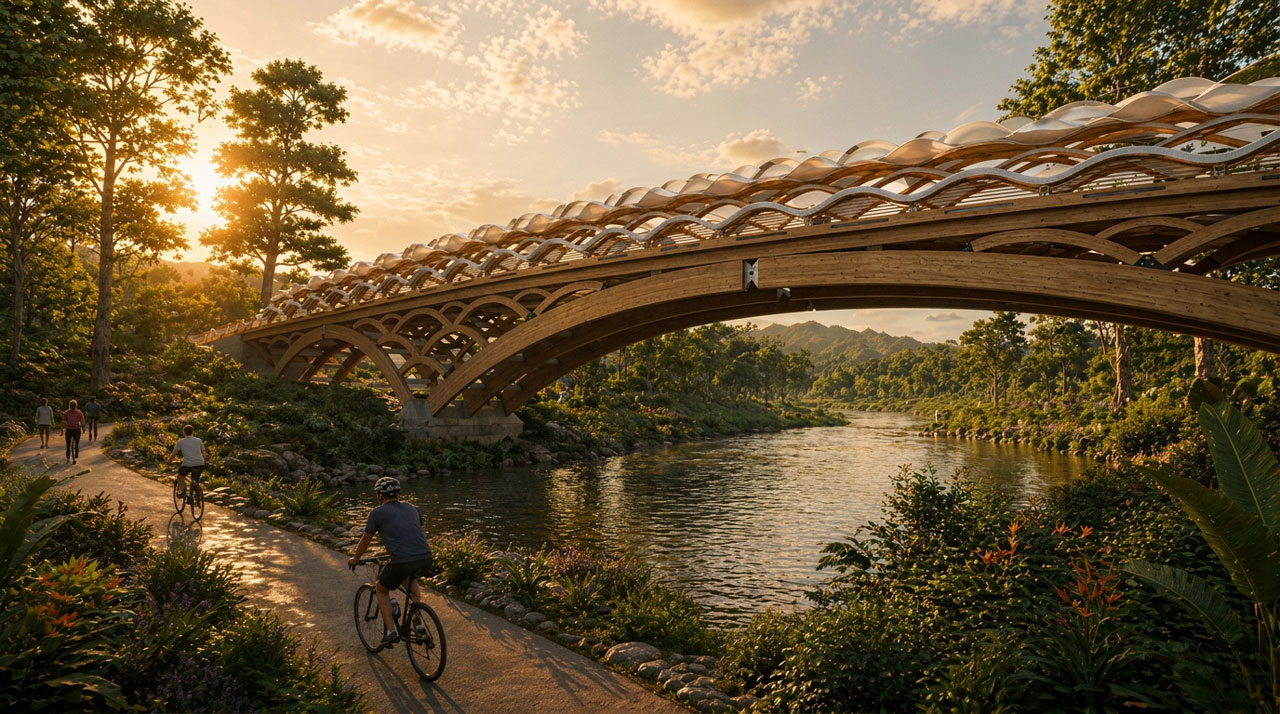
Golden hour beneath the canopy — the Bunya Bridge in dialogue with the existing Brisbane Valley Rail Trail.

The Bunya Bridge

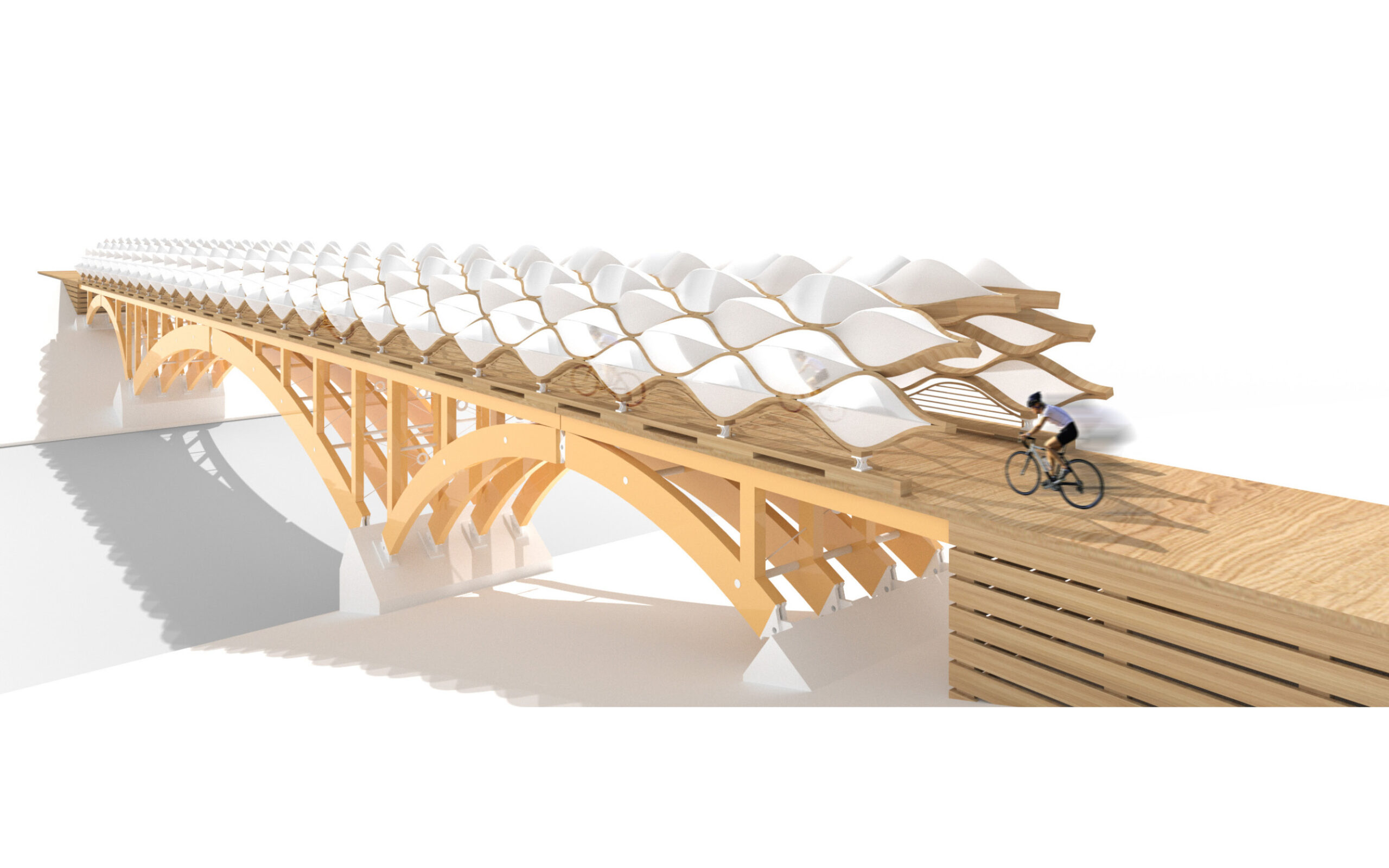
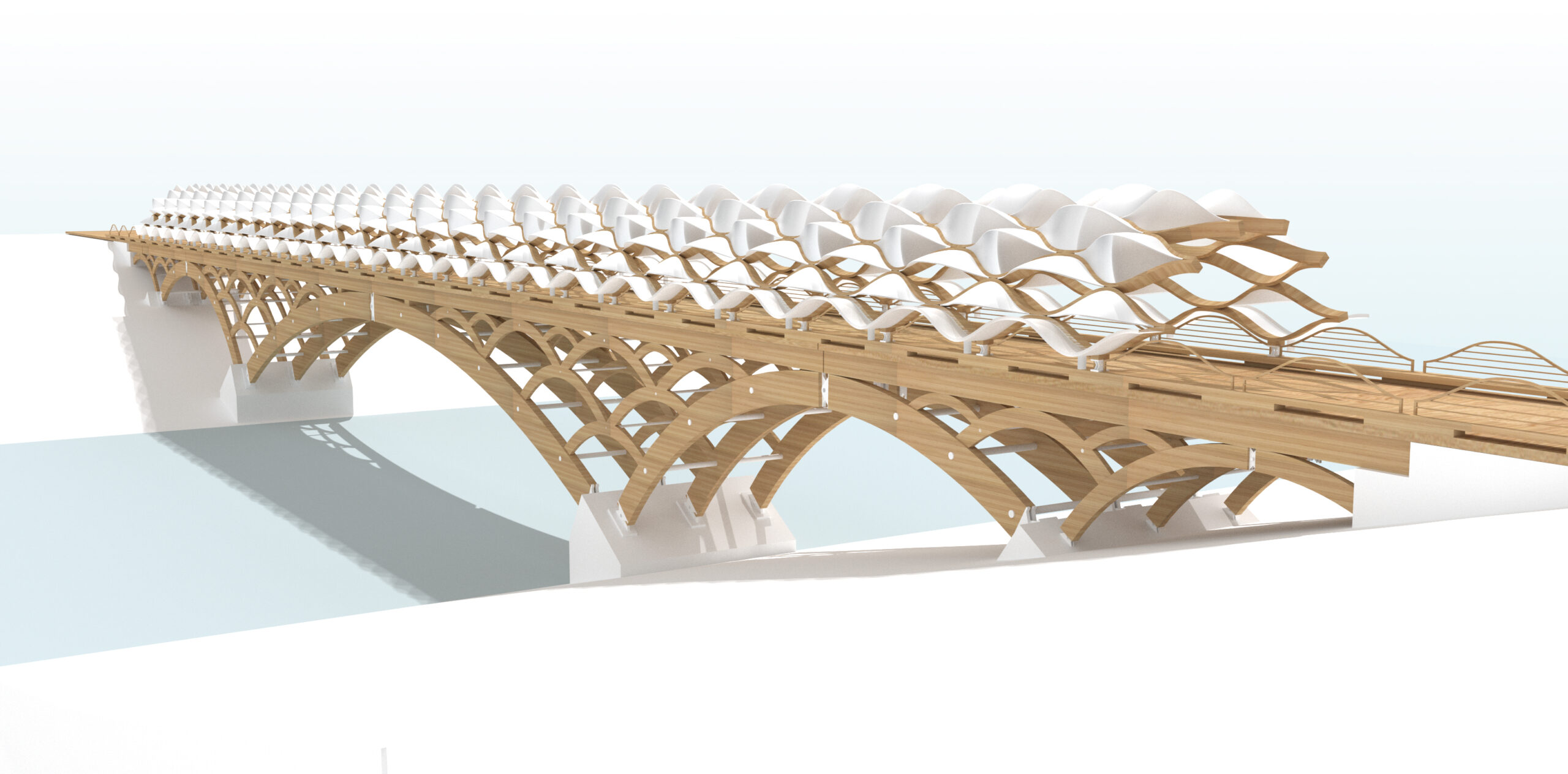
The bridge reconnects communities and landscapes across the creek, standing as a living tribute to the heritage-listed fallen Harlin Rail Bridge, whose memory continues to shape the town’s identity.

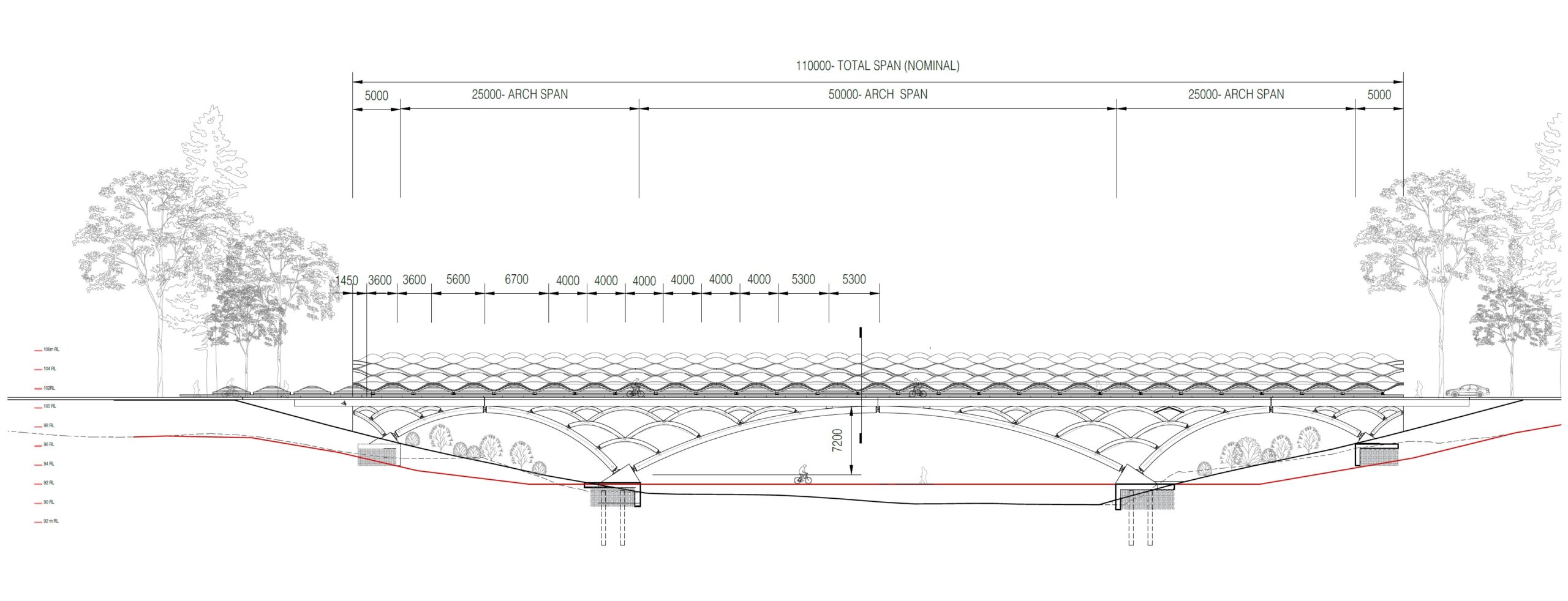
Spanning across the Ivory Creek , it uses a three-hinged arch configuration avoiding intrusive piling on the creek bed. It frames key views and provides a sheltered passage for cyclists, pedestrians, farm animals, and emergency vehicles. Designed to accommodate floodwaters, it transfers loads through the arch network to robust concrete abutments.

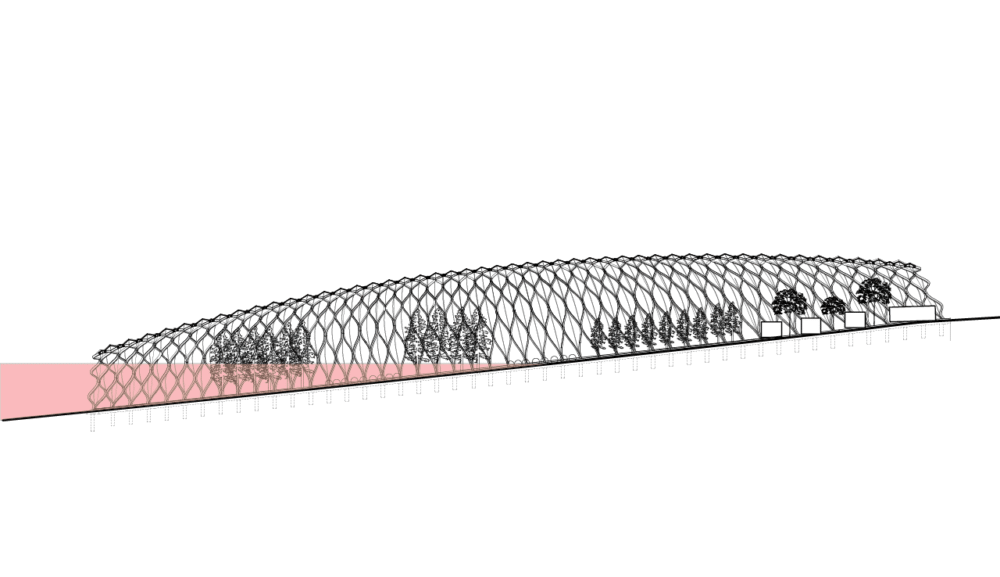
Elevation depicting the existing Brisbane Valley Rail Trail (red line), flood level, and proposed bridge.
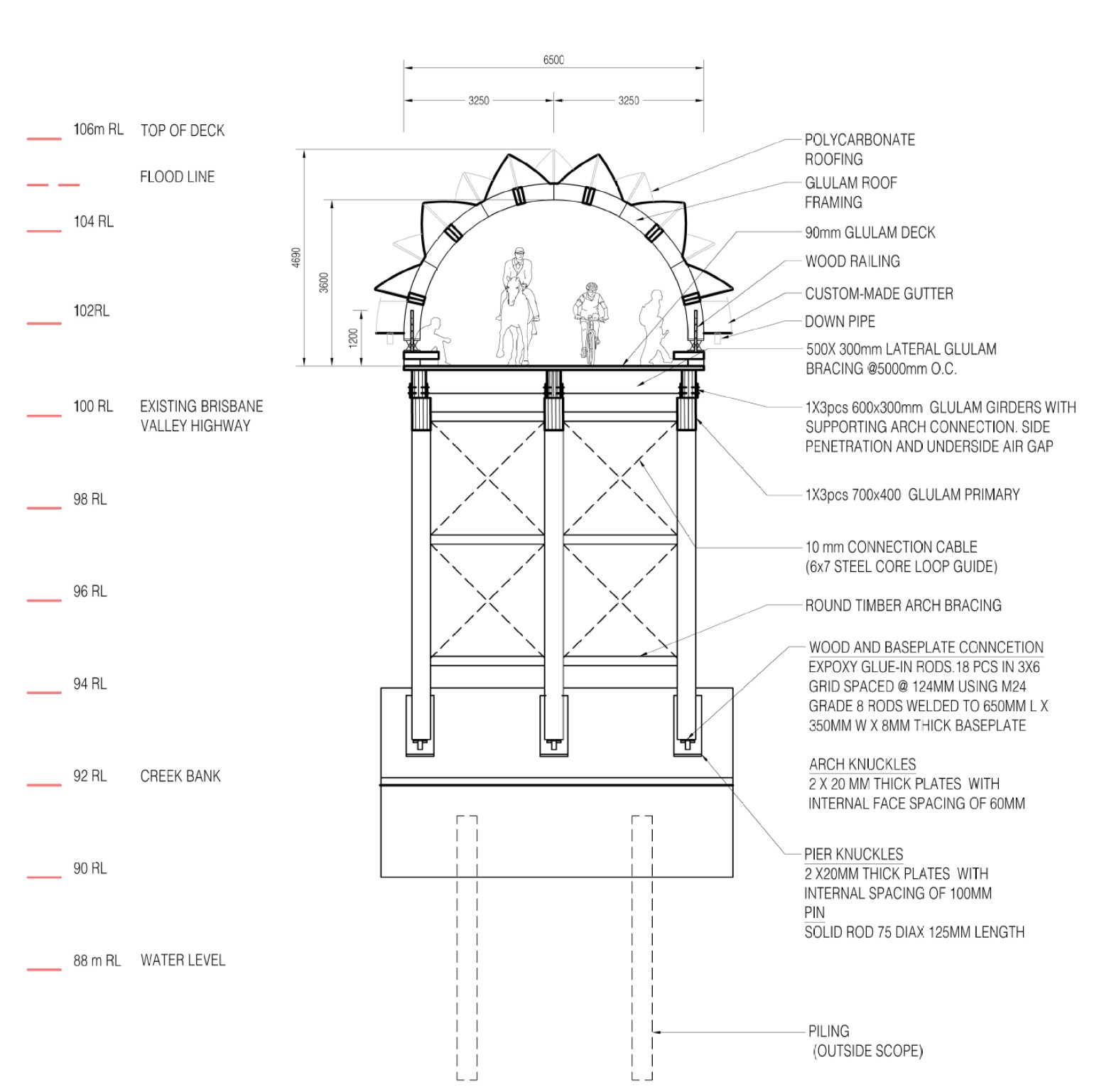
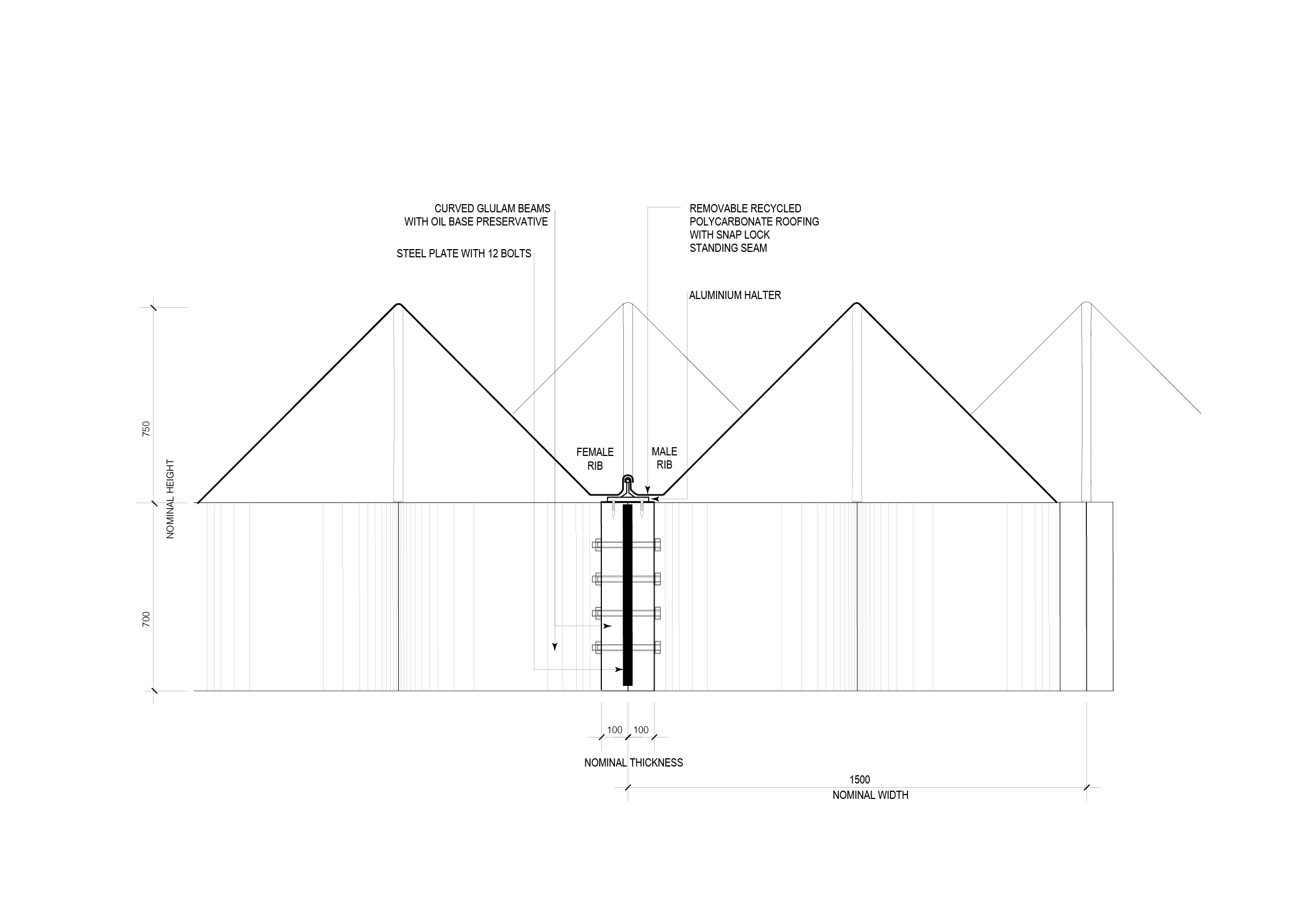
Bridge cross-section with specifications developed in collaboration with our engineering student partners.

The ‘BIG’ Bunya Tower

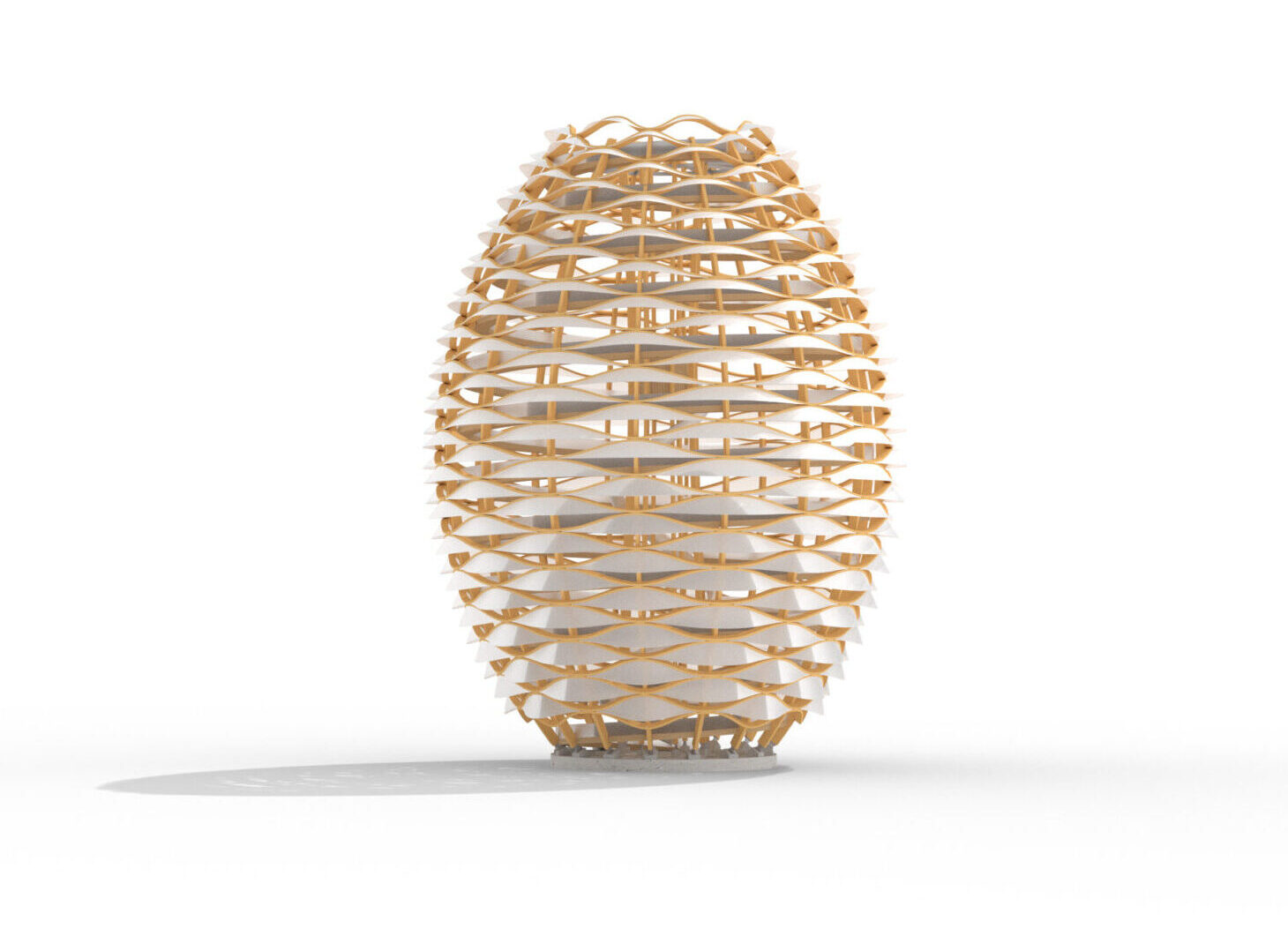
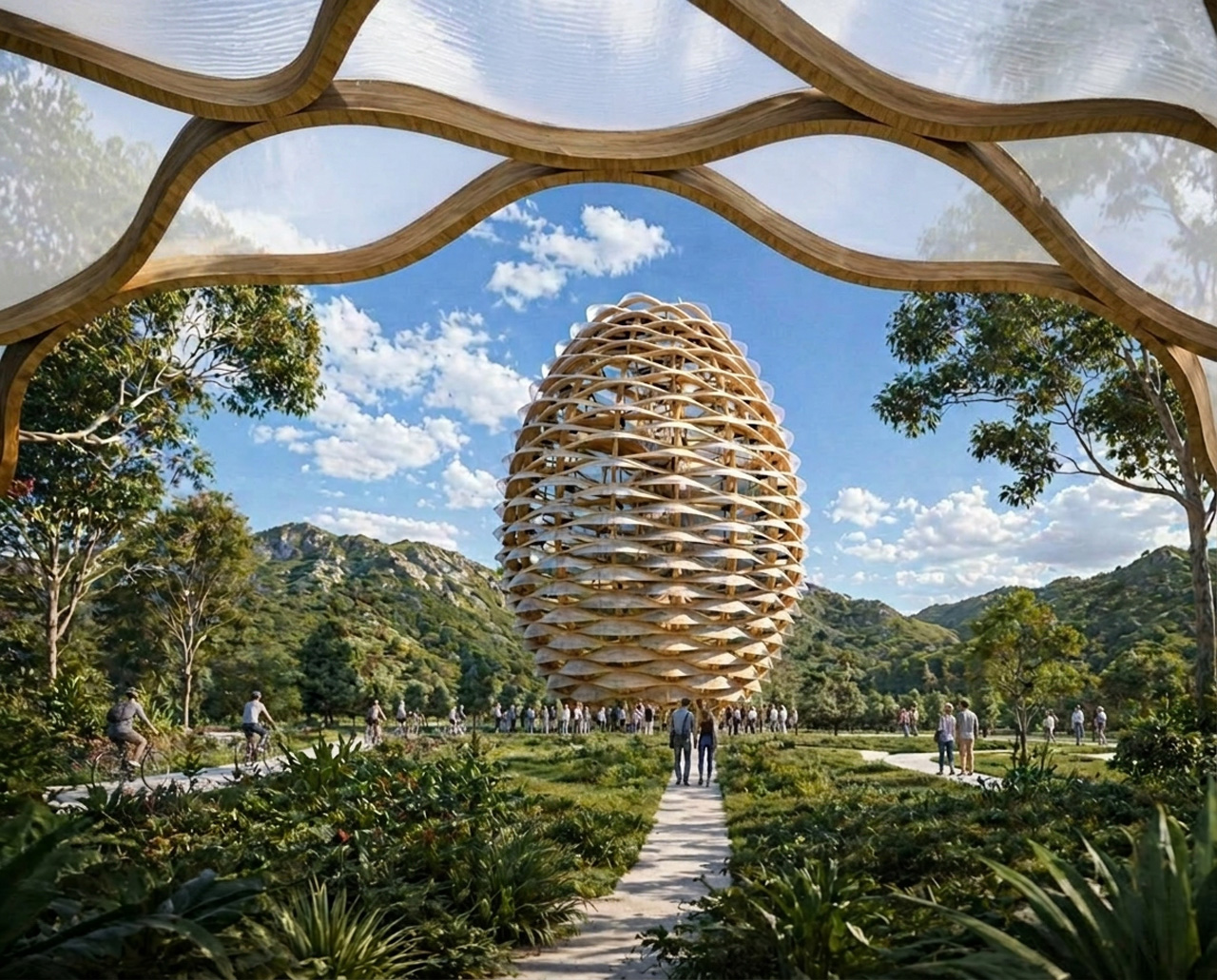
Inspired by Australia’s tradition of oversized roadside landmarks, the tower transforms the geometry of the Bunya cone into a monumental public lookout, rising 50 metres to the scale of a Bunya tree.

The spatial organisation draws from the cross-section of a female bunya cone—where a central core anchors seed pods that spiral outward—reinterpreted here as ramps and viewing platforms rising through the tower.

Positioned at the highest point of the site, the structure also harvests rainwater for landscape irrigation and emergency fire response.

The 'Big' Bunya Tower view from the research centre.

Interior Experience

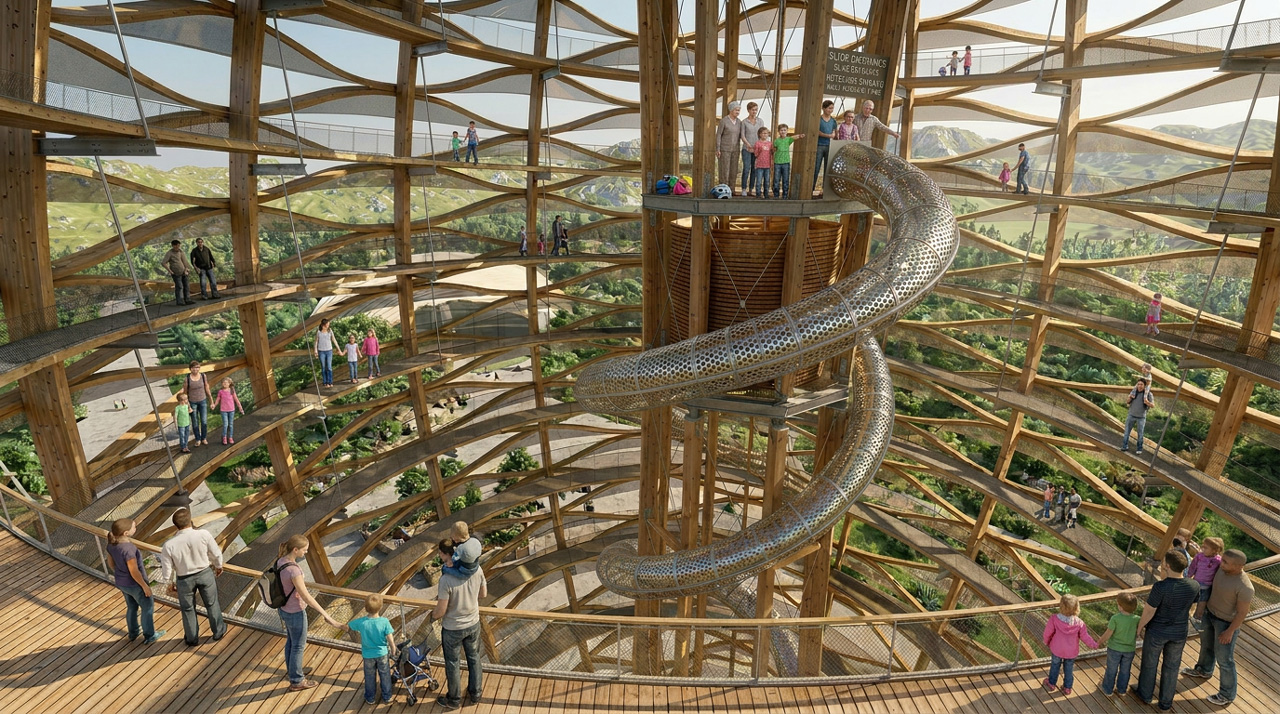
A spiralling circulation route rises through the timber lattice, connecting a sequence of viewing platforms within the tower. A 30-metre slide offers visitors a playful descent back to the ground.

Structural Framework

Sixteen curved GLULAM members form an ovoid outer structure, anchored by a central core of eight GLULAM columns. Together, they support the spiral ramp and viewing platforms, creating a lightweight lattice that filters daylight while framing expansive views of the surrounding landscape..

The Research Centre

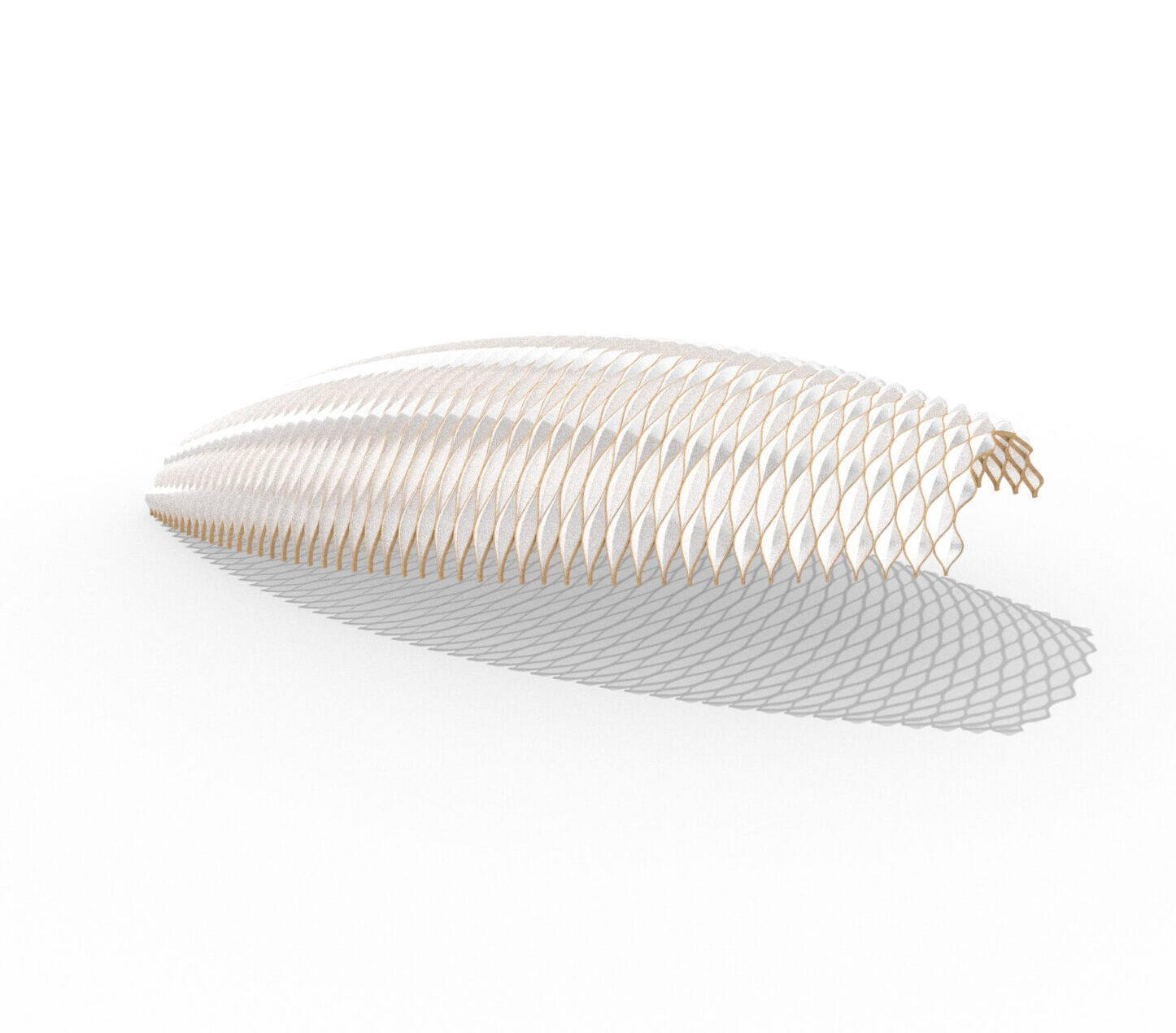
The centre serves as a scientific anchor and “living laboratory” for subtropical agroforestry, where high-value timber species and seasonal horticultural crops are interwoven into a productive, layered matrix. Positioned on elevated ground to ensure flood resilience, the facility houses laboratories and offices that overlook the experimental fields.

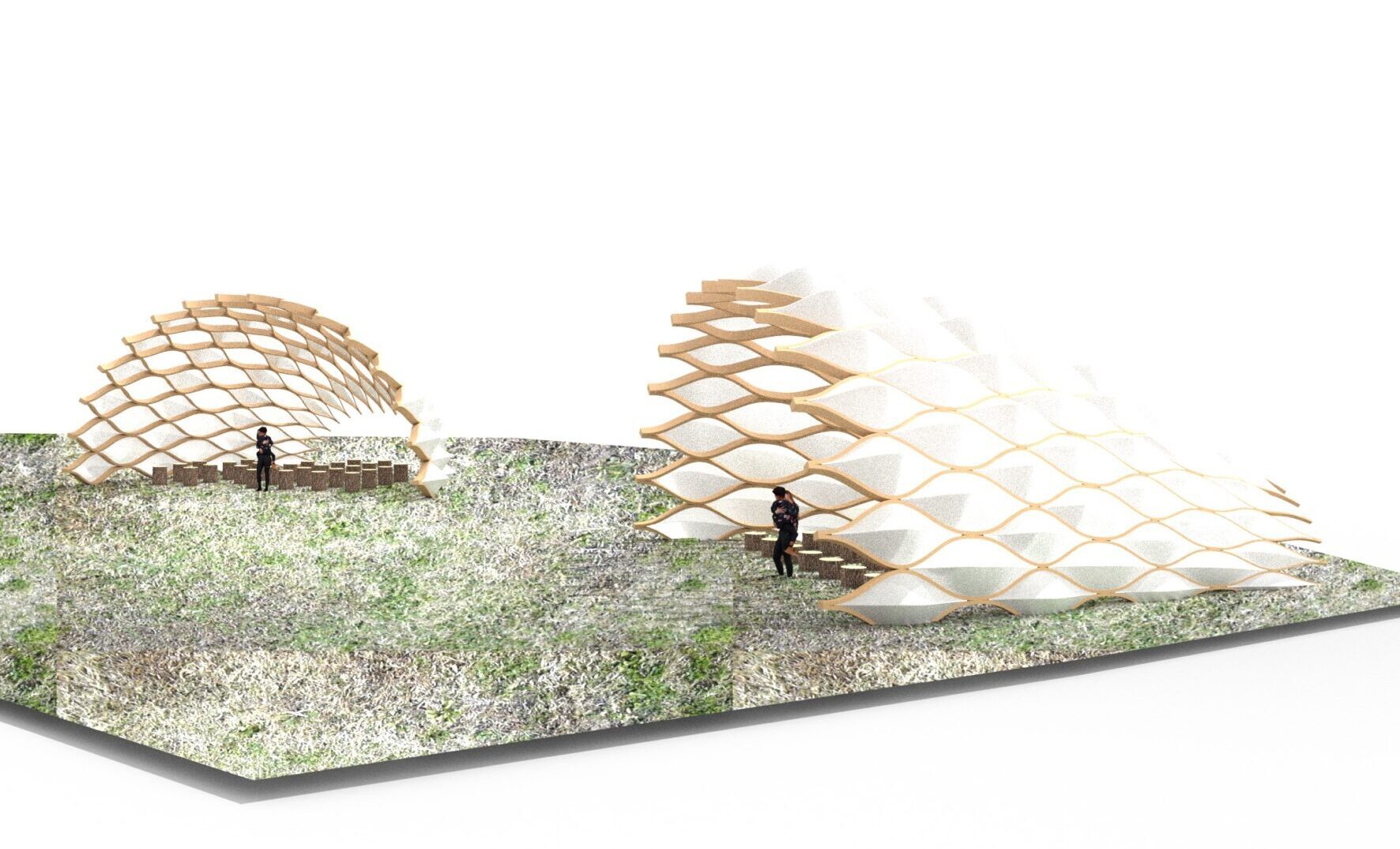
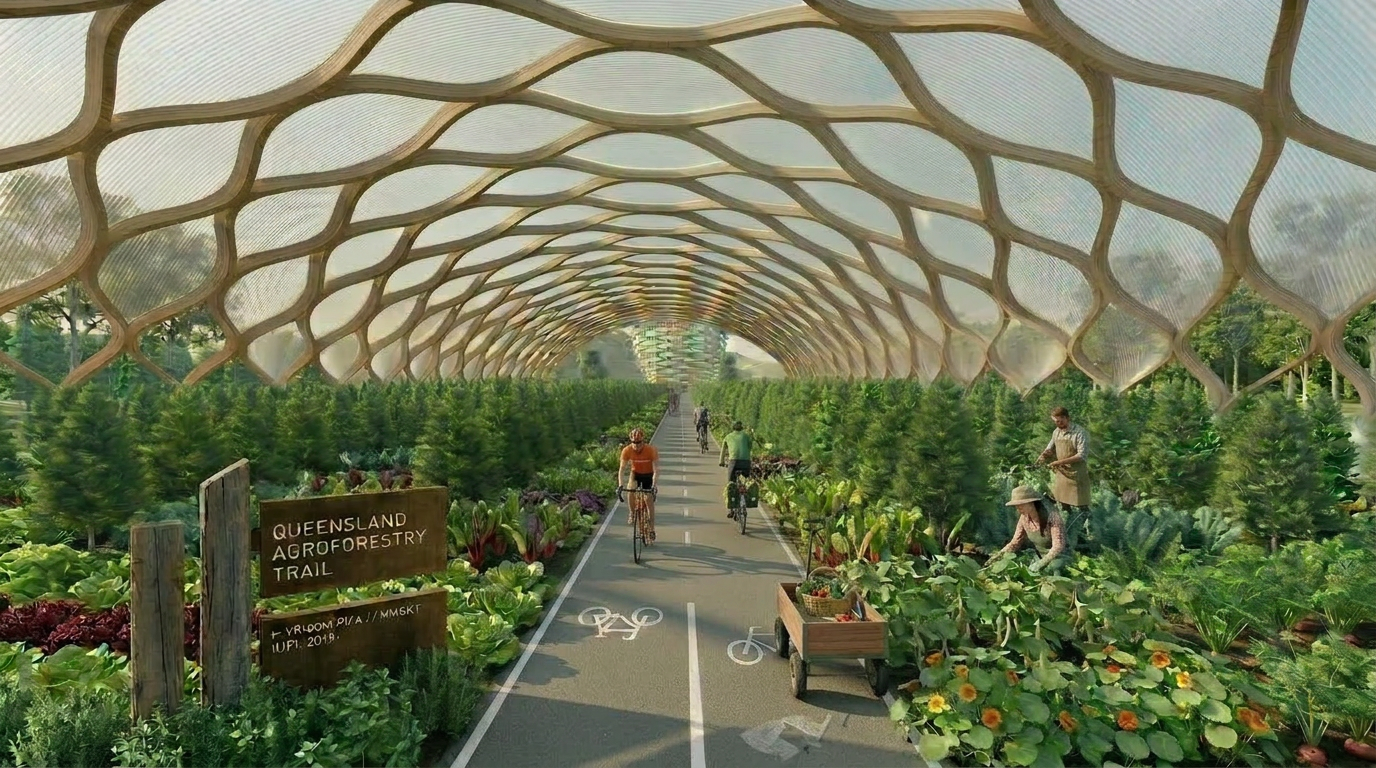
The Brisbane Valley Rail Trail weaves through and around the centre, immersing visitors in active cultivation and ecological restoration. This environment is sheltered by an adaptive modular canopy with interchangeable membranes, allowing the architecture to modulate light and ventilation in response to climate and research needs

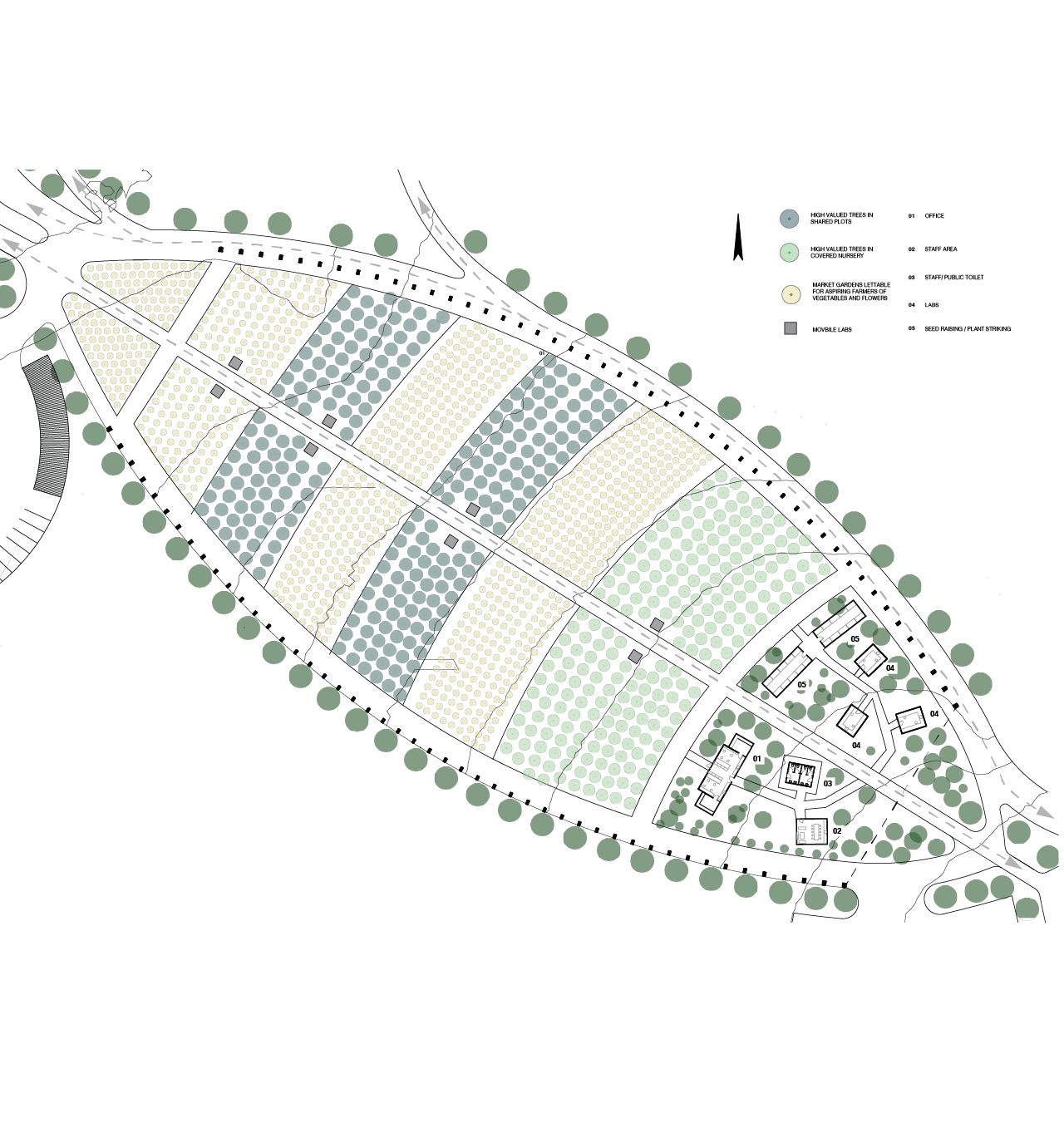
Research Centre Plan
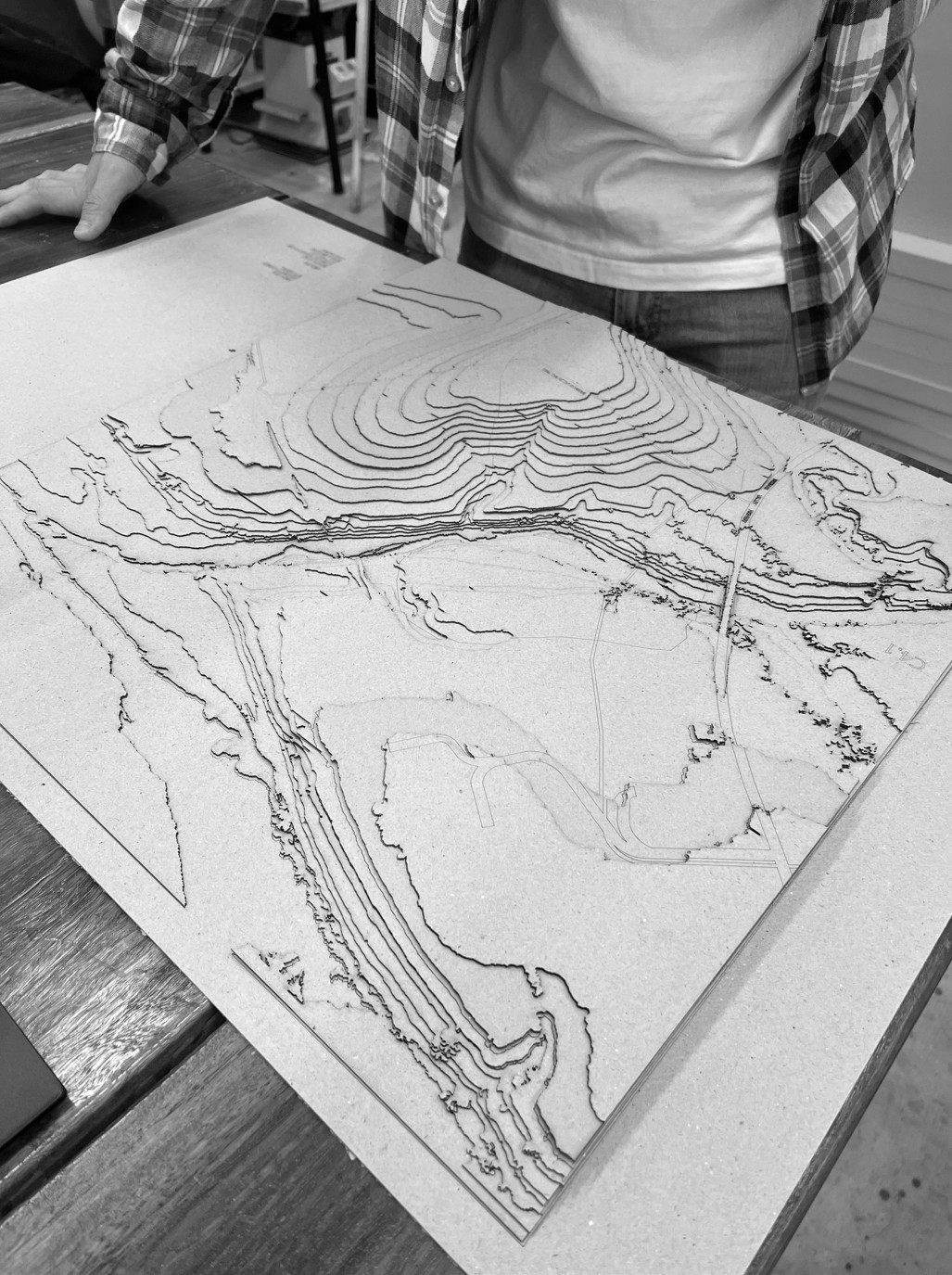
The form responds to site topography, allowing the aggregated modular seed to negotiate slope while maintaining structural continuity, with flood levels indicated.

The Public Lecture Hall

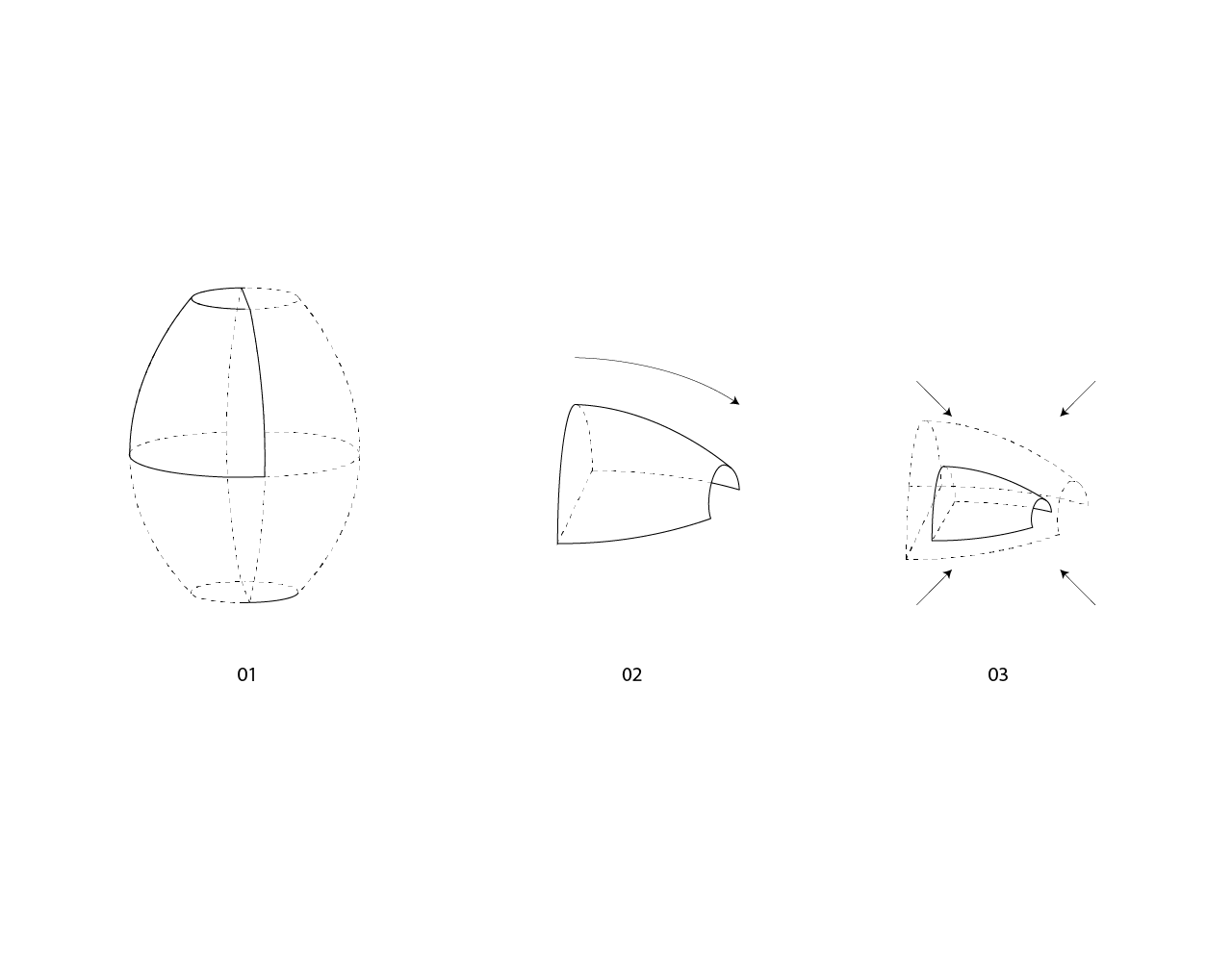
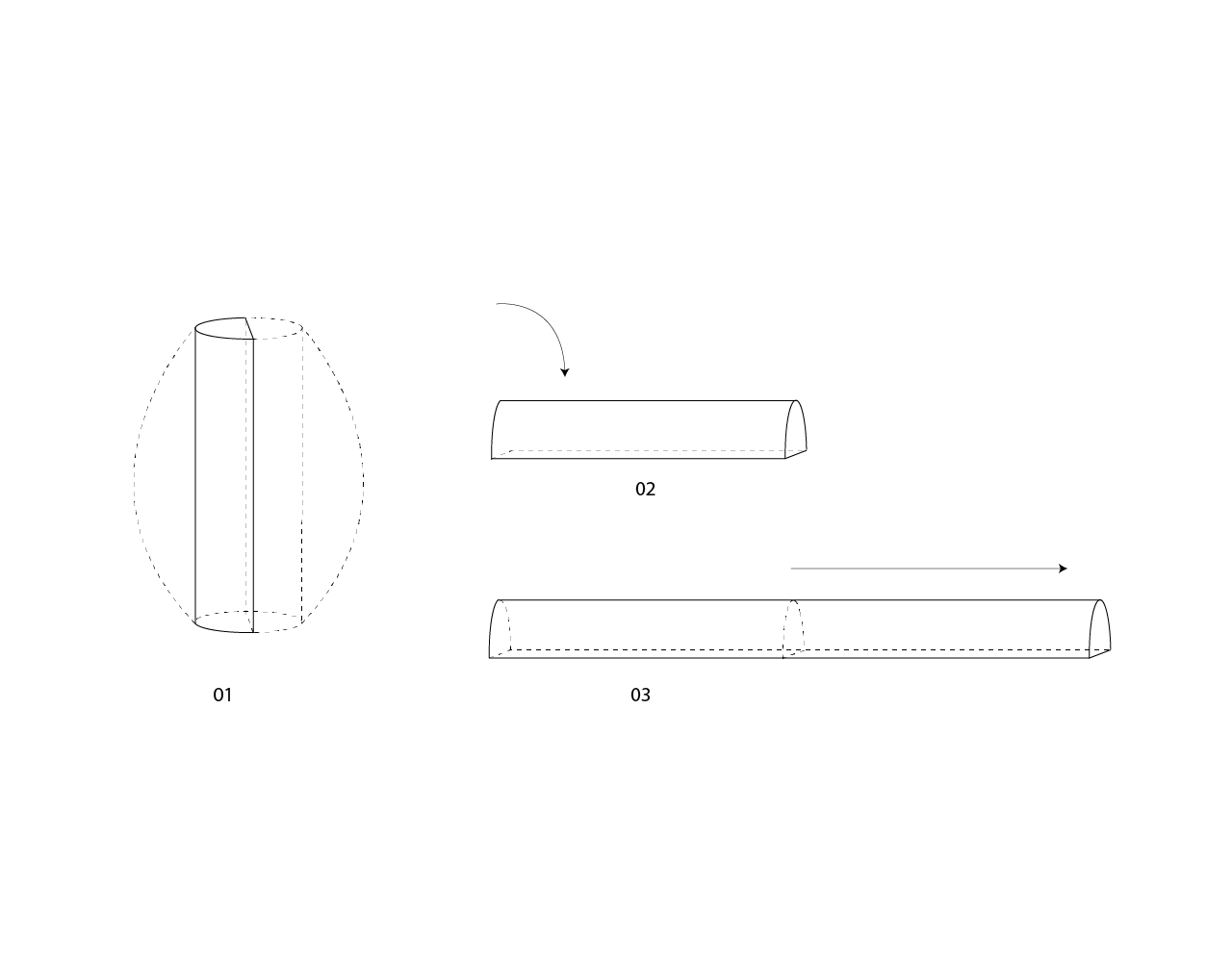
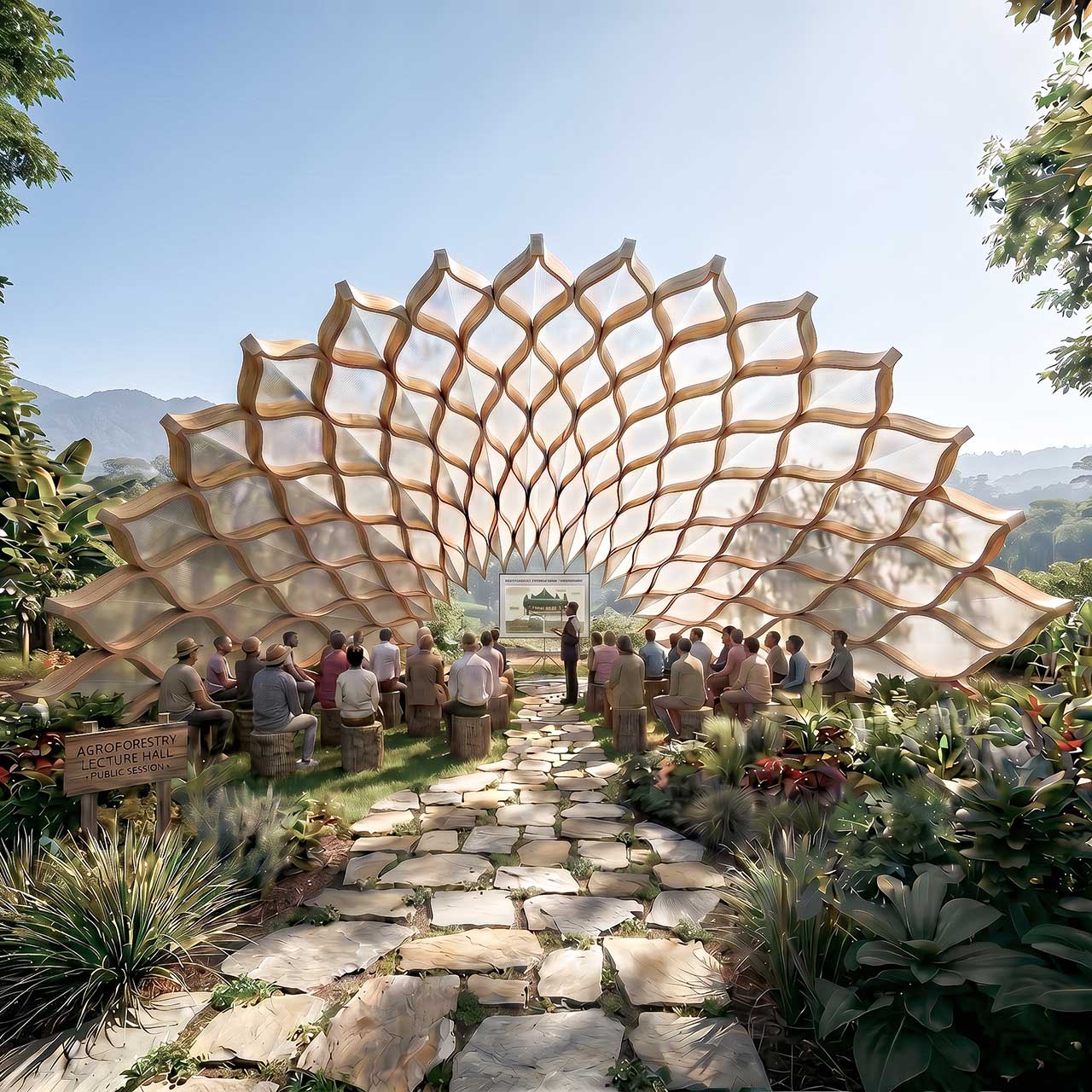
A multipurpose lecture and community hall formed by abstracting a quarter volume of the Bunya cone. Rotated and scaled down, the geometry creates intimate gathering spaces for educating communities and children about agroforestry. The hall opens broadly toward the tower, inviting gathering, before narrowing to frame the forestry landscape like a spatial lens.

System Resolution

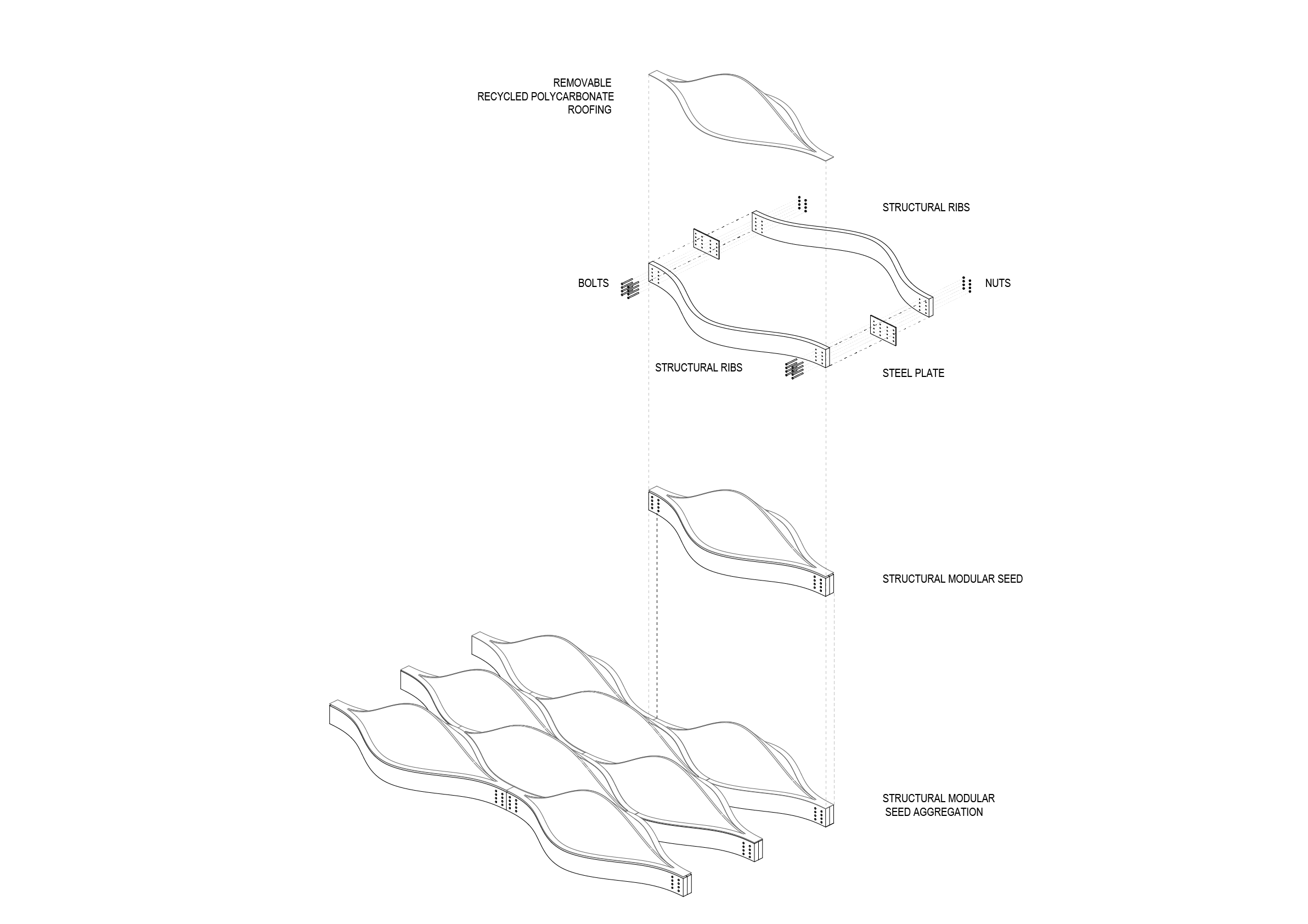
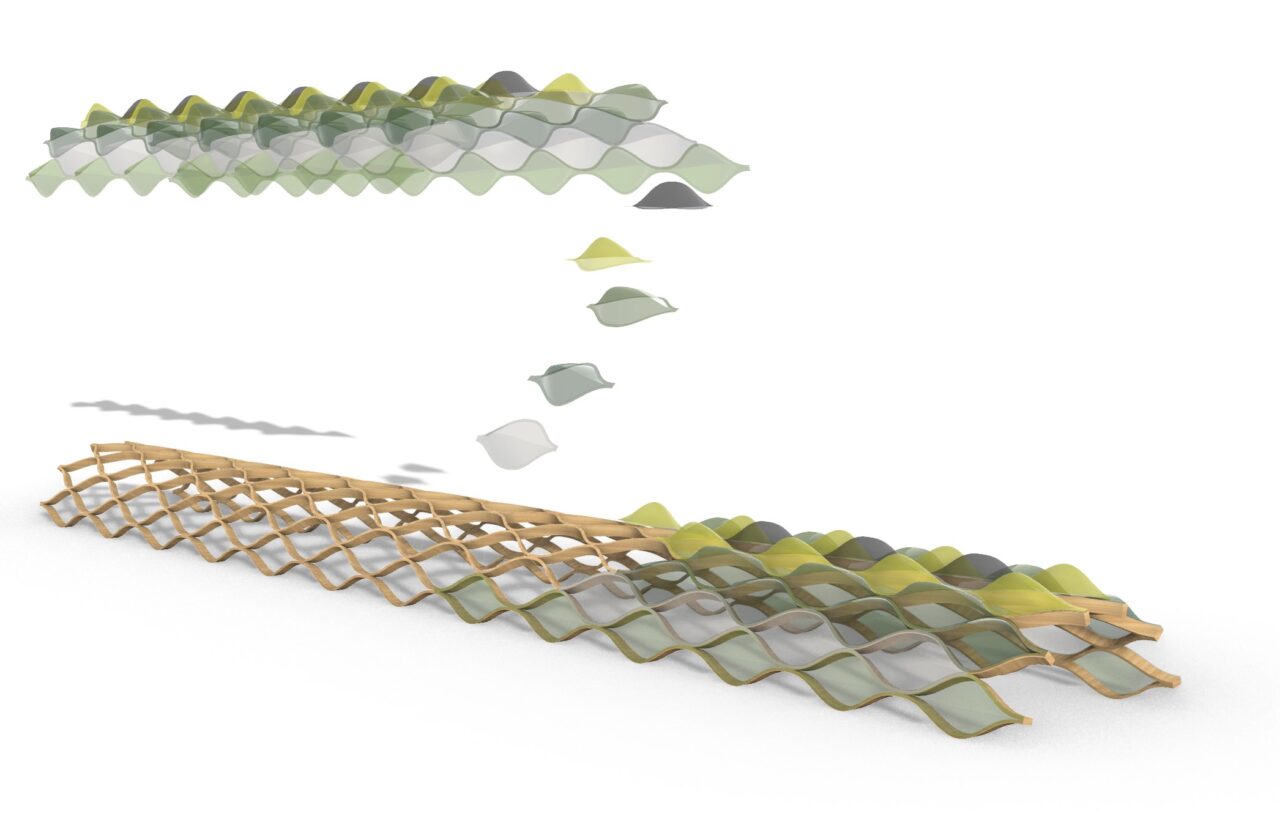
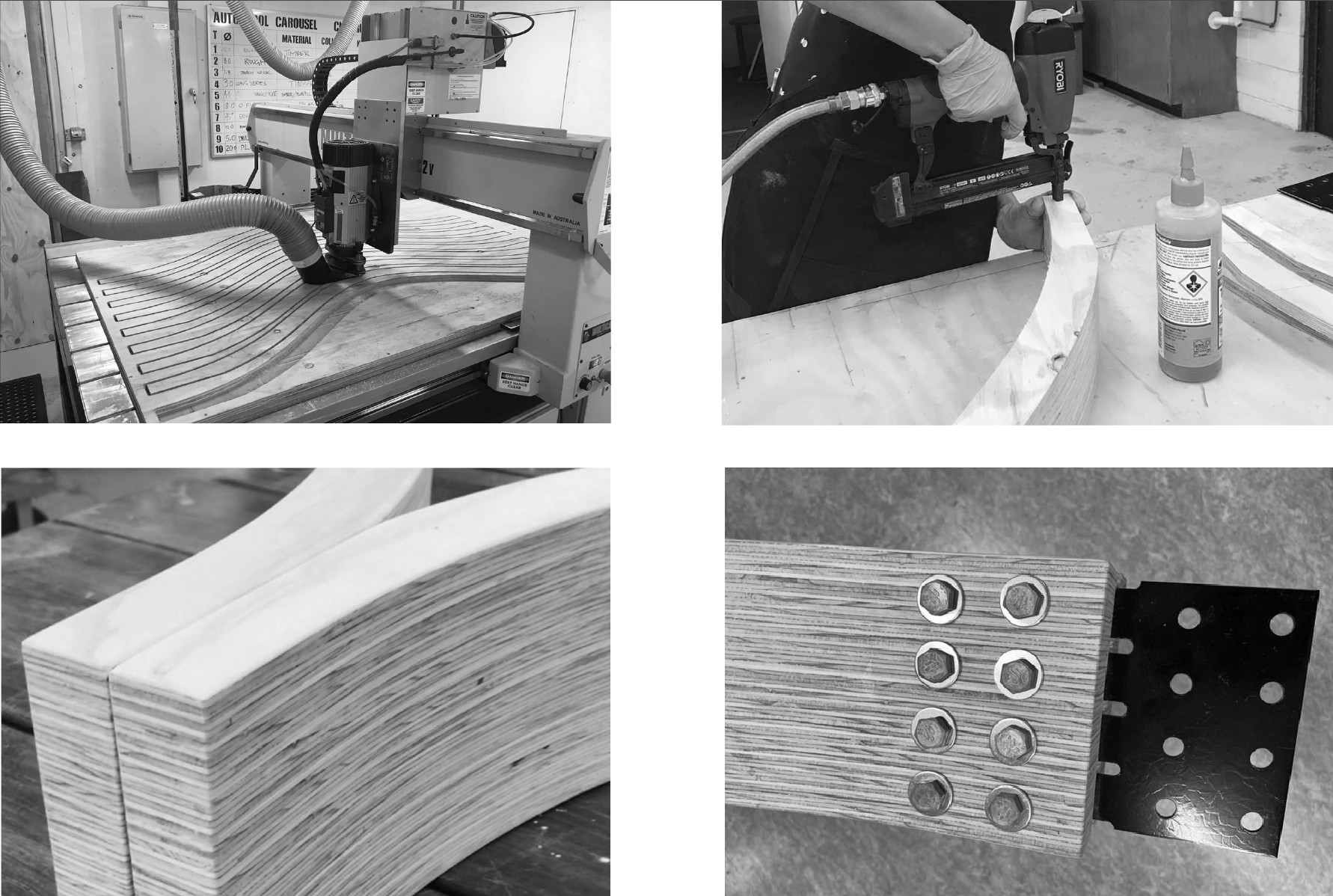
The modular seed is constructed from a single curved glulam member connected by steel plate and bolts, enabling structural aggregation. The resulting voids accommodate interchangeable roof membranes such as ETFE, bird netting, or fibreglass.

For the bridge canopy, moulded recyclable, hail-resistant polycarbonate panels are detailed with snap-locking seams and integrated drainage channels. The system provides filtered daylight, rain protection, durability, and replaceable panels, while allowing selective opening to support ventilation and flood permeability.

Detail of modular seeds at pre-bent state, prior to curvature.
Exploded isometric of the modular seed.
Bridge roof modular seed installation (bent state), showing colour-coded sequencing of shingled polycarbonate panels.

Flat Prototype for Assembly Testing

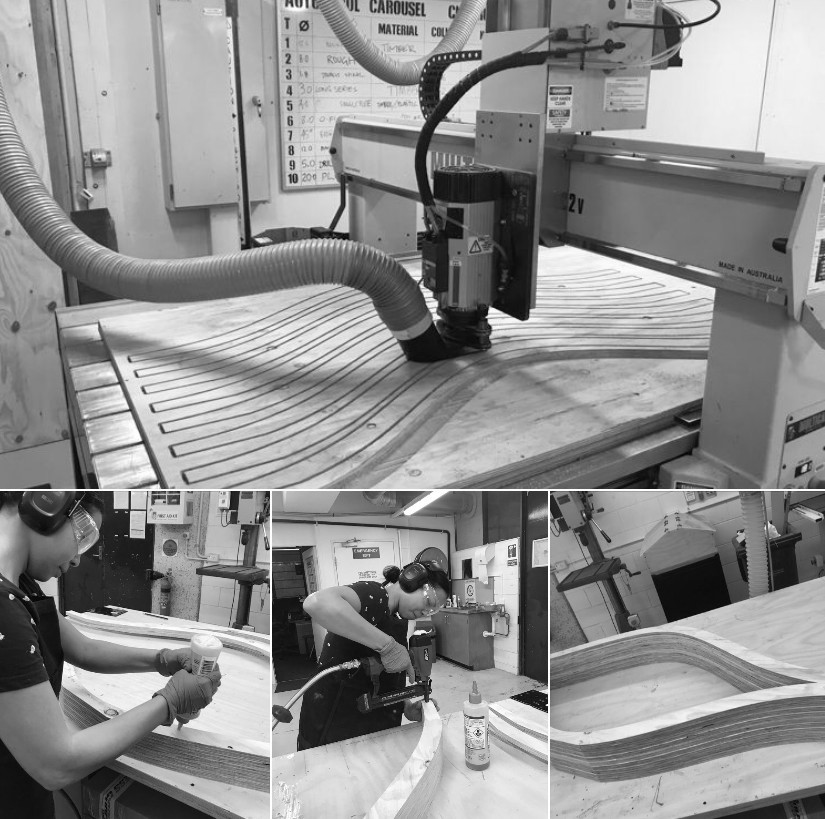
A prototype was fabricated in planar laminated plywood sections to test joint tolerances, connection logic, and assembly sequencing.

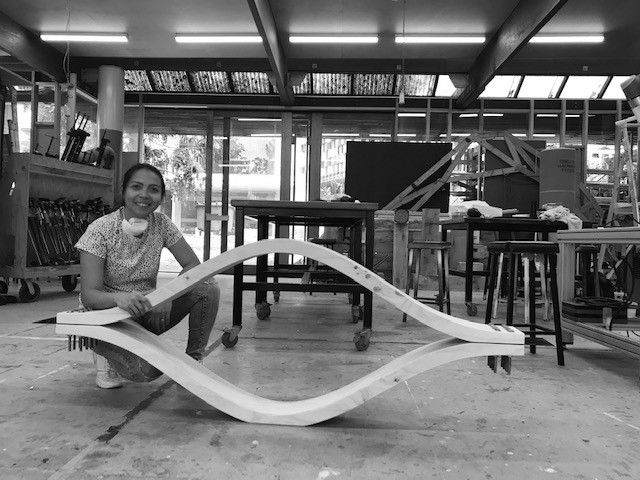
Prototype constructed in laminated plywood to simulate curved glulam geometry.
Prototype of a single modular seed element, testing form and assembly.
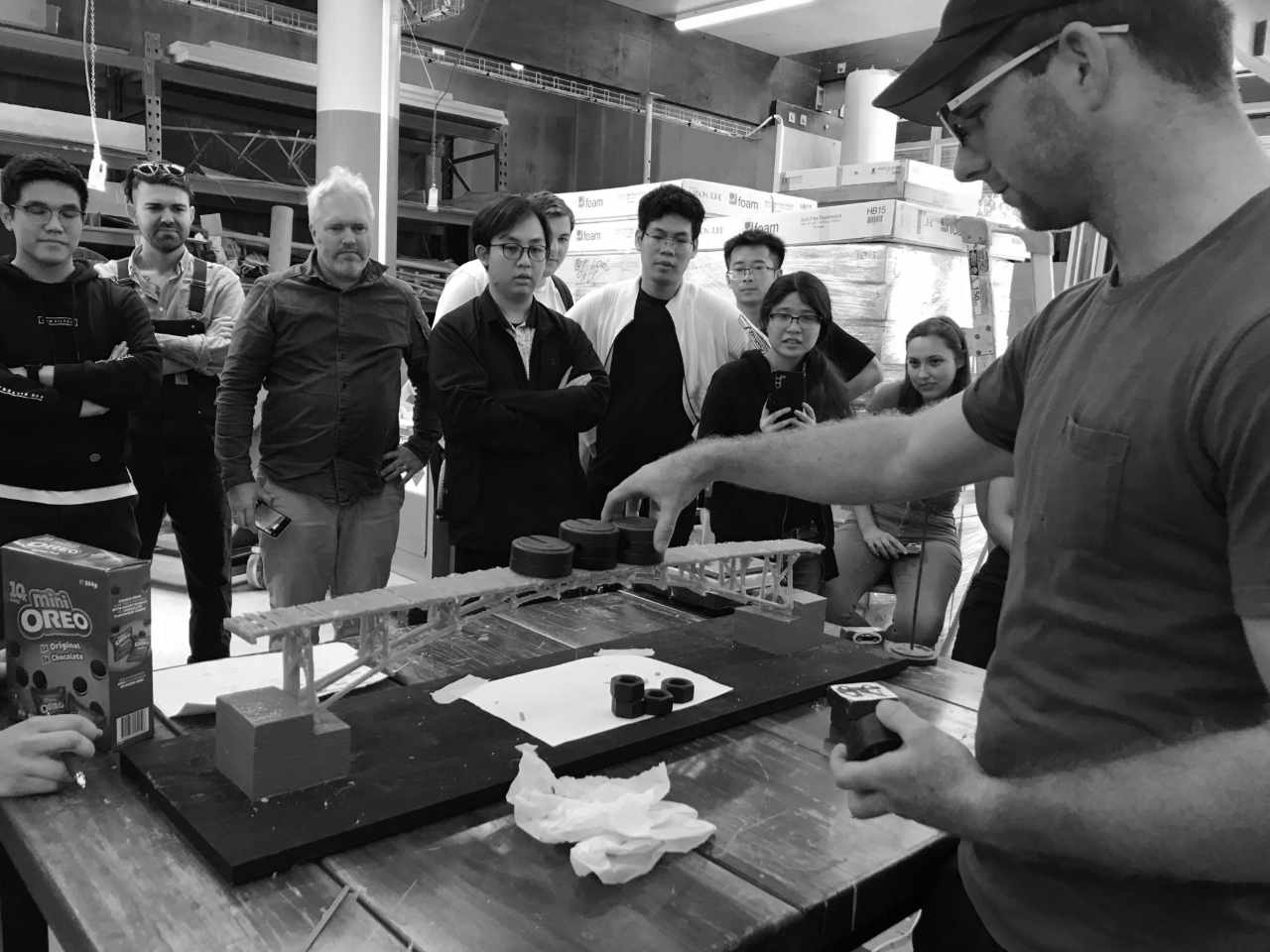
Early bridge concept with vertical supports, later developed into a network of arches — tested with an engineering team using a spaghetti pasta prototype.

Reflection

Harlin Bunya Grove reshaped how I understand generative design. It became less about computational form-making and more about listening — allowing Country, growth, and pilgrimage to guide the architecture.

Rather than imposing a design, I learned to respond to the site’s landscape, ecology, and stories. The re-routed rail trail, bridge, tower, and research centre emerged through this dialogue, shaped by movement, heritage, and the natural logic of the place.

Collaborating with engineering students grounded the work further. Through prototyping and structural testing, I saw how ideas translate into material reality. The process strengthened my appreciation of clarity, structure, and shared responsibility.

This project affirmed for me that designing with Country is about creating systems that evolve — places that support renewal and remain open to change. It is a continuous relationship rather than a fixed outcome.

The project also revealed opportunities for future development through algorithmic generation and further environmental and structural testing.

Project Gallery

Project Location